- 28.7.2026
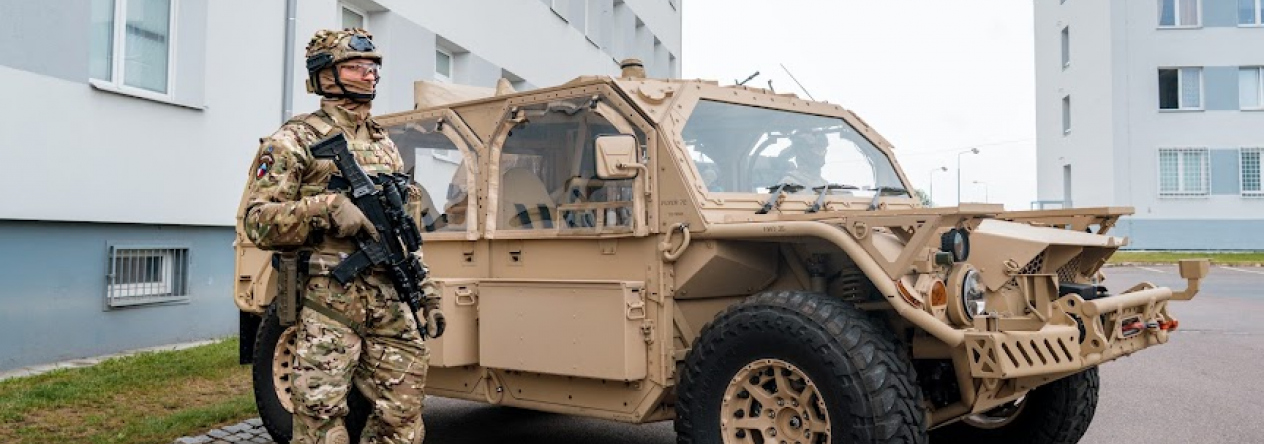
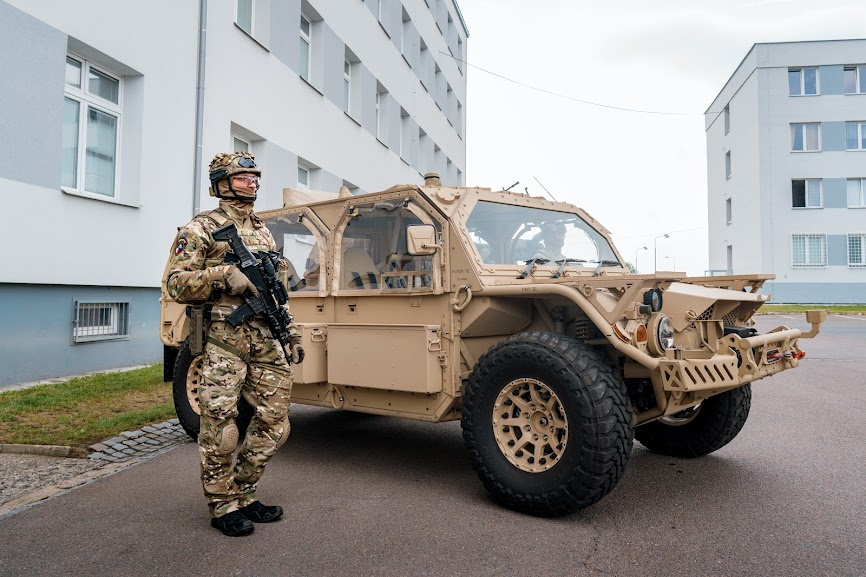
The Flyer 72 HD light assault vehicle is a platform developed from the outset for special operations and airborne units. It is not a civilian vehicle adapted for military use, but a compact, fast and modular military off-road vehicle designed for units that must move quickly, carry their own weapons, ammunition, communications equipment and supplies, and operate in difficult terrain with minimal logistical support.
Modern airborne units need equipment that matches the way they fight. It must be light, fast and air-transportable, yet capable of carrying the crew, weapons, ammunition, water, fuel, communications equipment and other gear required to complete the mission. The Flyer 72 HD, a light assault vehicle made by the US company Flyer Defense, belongs in precisely this category.
The Flyer 72 HD was developed to meet requirements set by the US Special Operations Command (USSOCOM), which oversees the special operations forces of the individual branches of the United States Armed Forces. The manufacturer describes it as a purpose-built lightweight ground mobility vehicle: a vehicle designed from the outset for military use and demanding operational tasks. The F72-HD variant was selected under the Ground Mobility Vehicle 1.1 programme, which addressed the mobility requirements of US special operations forces.
Built for soldiers, not adapted from a civilian platform
One of the defining features of the Flyer 72 HD is that it is not a conventional civilian platform subsequently modified for military use. Its distinctive design was based from the beginning on the requirements of special operations and airborne units: high speed, strong off-road performance, compact dimensions, a low silhouette, air transportability, ease of maintenance and rapid reconfiguration for the mission at hand.
The vehicle is built around a rigid tubular frame to which individual components are bolted or riveted. This allows quicker repairs, replacement of damaged parts and adaptation to a specific mission. The vehicle can be configured for a range of tasks, from assault operations, reconnaissance, command and communications to security, support and casualty evacuation.
It is also important to distinguish the manufacturer correctly. The Flyer is often associated in public reporting with General Dynamics, particularly because of US production contracts. However, the platform's engineering, design and development are the work of Flyer Defense. This distinction also matters for industrial cooperation, service support and any modifications tailored to a particular user's requirements.
Why “72”?
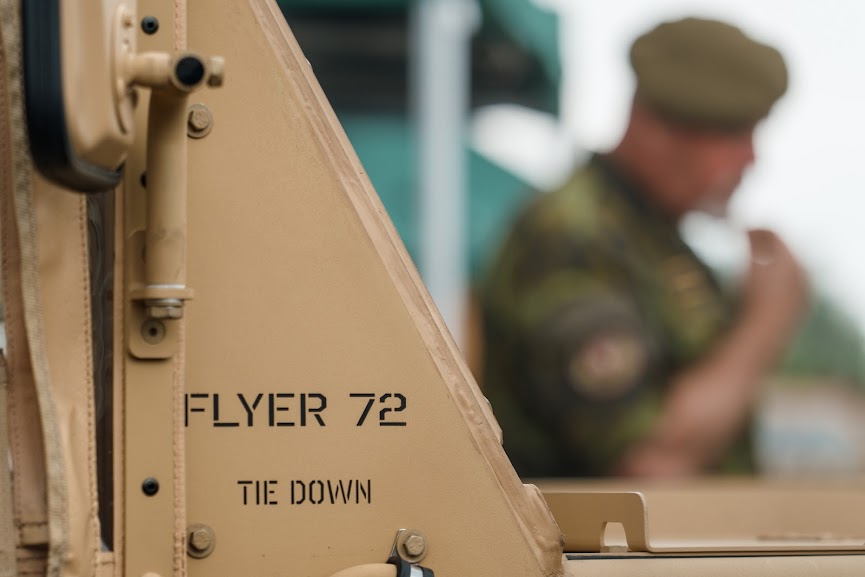
The Flyer 72 name is no coincidence. The number refers to a key dimensional requirement: in its transport configuration, the vehicle is approximately 72 inches, or about 183 centimetres, wide. The same figure also applies to its height. These compact dimensions are one reason why the vehicle can be transported inside aircraft and helicopters such as the CH-47 Chinook, CH-53 and C-130.
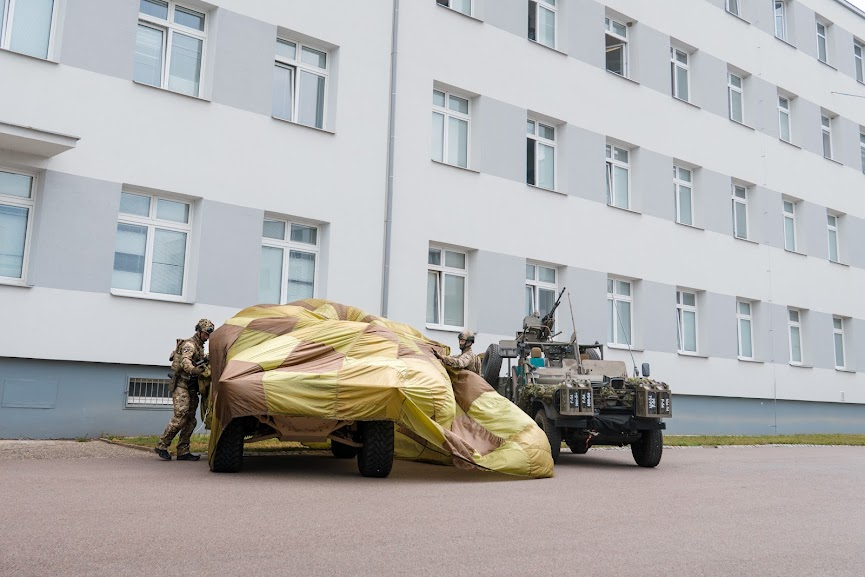
This strategic and tactical transportability is one of the platform's principal advantages. After an air move, an airborne unit can regain its own ground mobility virtually as soon as the vehicle is unloaded. According to the manufacturer, the vehicle can be ready for combat within tens of seconds of leaving the aircraft. It has also been successfully tested for airdrop delivery.
Speed, payload and the ability to operate without immediate resupply
The Flyer 72 HD is designed to carry not only its crew but also a substantial amount of equipment. According to the manufacturer, it has a curb weight of approximately 3.3 tonnes and a payload of 5,700 pounds, or roughly 2.6 tonnes. In practical terms, this provides capacity for weapons, ammunition, water, fuel, communications equipment, medical supplies and other materiel required for a unit to operate in the mission area for several days.
The vehicle is powered by a 2.0-litre turbocharged diesel engine producing 220 hp, or approximately 164 kW, and 450 Nm of torque. It has a six-speed automatic transmission. The manufacturer gives a top speed of 95 mph, approximately 153 km/h. Range varies with the driving profile: the stated figures are about 483 km under a combat mission profile and up to 805 km on level ground at 40 mph.
For paratroopers, its performance is about far more than road speed. The Flyer 72 HD is designed primarily for off-road use. It features independent suspension, adjustable ground clearance, tyres with beadlocks and run-flat inserts, an unprepared fording depth of approximately 76 centimetres, the ability to climb gradients of up to 60 per cent and safe handling on demanding side slopes.
Driver in the centre, crew around them
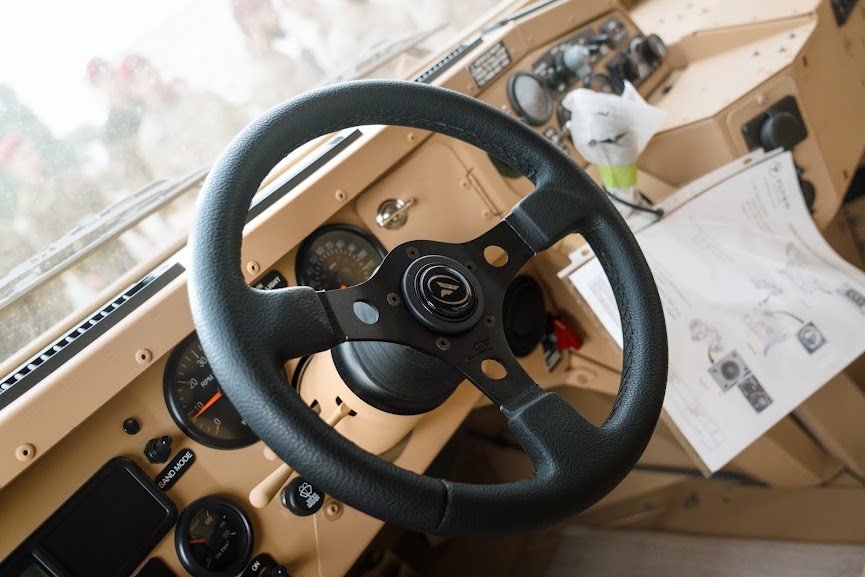
One of the Flyer's most striking design features is its centrally positioned driver. This arrangement improves visibility and allows the driver to focus primarily on controlling the vehicle, negotiating terrain and maintaining the speed of the move. Other crew members can monitor security around the vehicle.
Depending on the configuration, the vehicle can accommodate up to nine personnel, while the manufacturer's brochure specifies five seats in the armoured configuration. This distinction matters: crew capacity always depends on the specific fit, level of protection, weapons and amount of materiel carried.
Firepower tailored to the mission
The Flyer 72 HD can accommodate a variety of weapon systems. Its primary weapon position is located on the roof and, depending on user requirements, can be fitted with either a manned or remotely operated weapon station. The manufacturer states that weapons up to the 30 mm cannon category can be integrated, along with side mounts for smaller crew-served weapons.
For Czech service, configurations suited to the requirements of airborne units are being considered. These may include a main mount with a heavy machine gun, side mounts for lighter machine guns, communications equipment, ballistic protection and other equipment defined by the user's final specification. Publicly presented options for the platform include heavy machine guns, automatic grenade launchers, anti-tank guided missiles and specialised weapon and sensor systems. When presenting the vehicle in the Czech Republic, STV GROUP listed possible weapons including a 12.7 mm machine gun, the MK-47 automatic grenade launcher, Javelin or Spike LR2 anti-tank guided missiles, and other systems.
The objective, however, is not to turn a light vehicle into a heavy armoured vehicle. The Flyer's principal advantage remains its combination of mobility, speed, carried firepower and rapid reconfigurability. In some situations, speed of movement, freedom to choose a route and the ability to operate away from expected approaches are among the most important forms of protection.
Modular protection
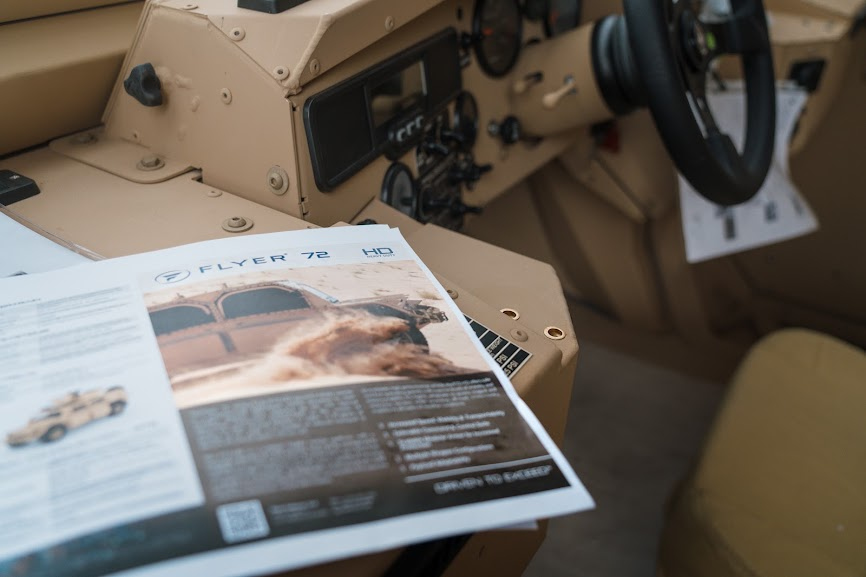
The Flyer 72 HD can be fitted with modular ballistic and mine protection. The manufacturer's brochure lists an optional ballistic kit providing STANAG Level II crew protection, a STANAG Level I mine-protection kit and a GPK – Gunner Protection Kit.
Light vehicles in this class always involve a trade-off between protection, weight, mobility and payload. A higher level of protection adds weight and leaves less capacity for other equipment. The advantage of a modular solution is that the vehicle can be tailored to a particular mission: a configuration for rapid movement may differ from one intended for patrolling, casualty evacuation or carrying heavier weapons.
A platform proven by special operations and airborne units
The Flyer 72 HD is not an experimental concept but a fielded platform used by special operations and airborne units. During a presentation of the vehicle in 2022, STV GROUP stated that the Flyer 72 HD was in service with elite special operations and airborne units in the United States and other allied NATO armed forces, and had been deployed during coalition campaigns in Afghanistan, Iraq and Syria.
According to publicly available information, other users of, or parties interested in, the Flyer 72 platform include the Israel Defense Forces, Ukrainian special operations forces, Italy, Greece and the United Arab Emirates. The Israeli version is named Be’eri, after Kibbutz Be'eri, which was attacked on 7 October 2023.
Czech context: replacing the Kajman fleet
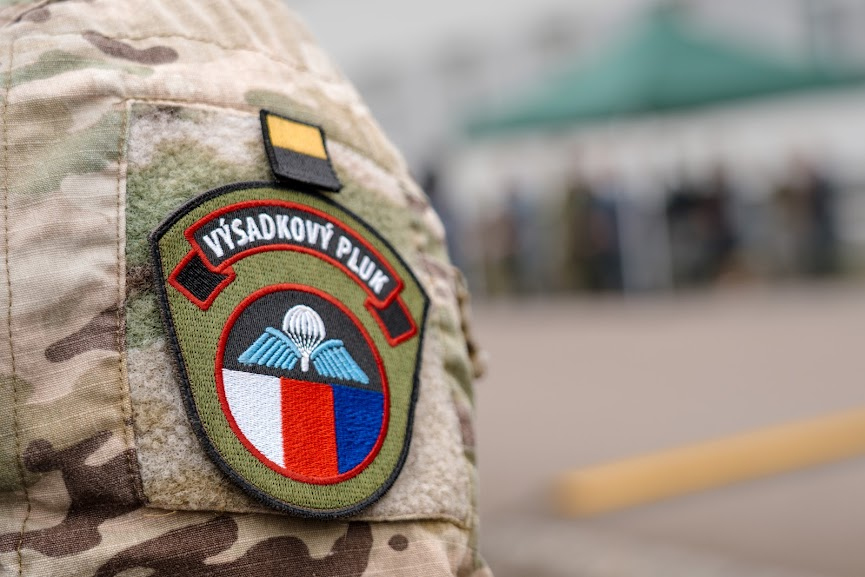
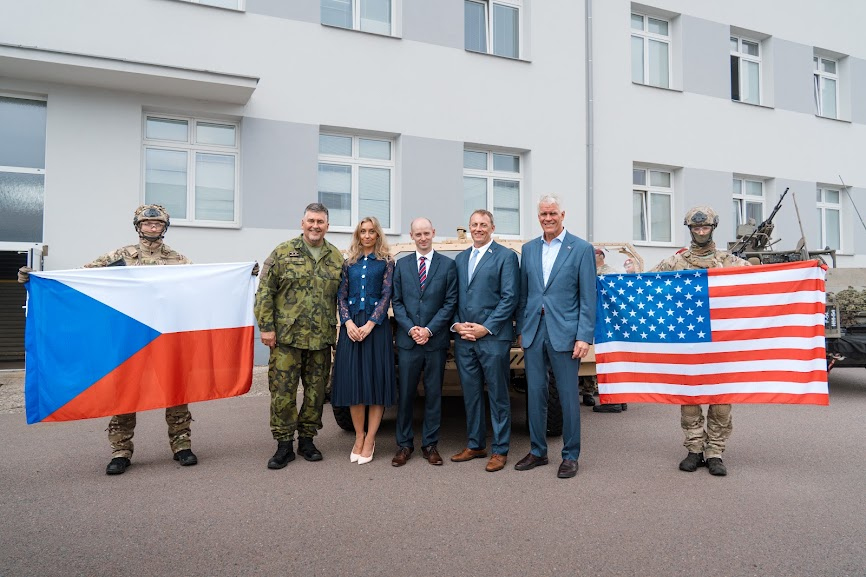
The Czech Republic received 40 Flyer 72 HD vehicles from the United States through the Foreign Military Financing programme as compensation for earlier assistance provided to Ukraine. The Czech Armed Forces have already taken delivery of the first vehicles, which were ceremonially unveiled at the 43rd Airborne Regiment in Chrudim on 1 July 2026.
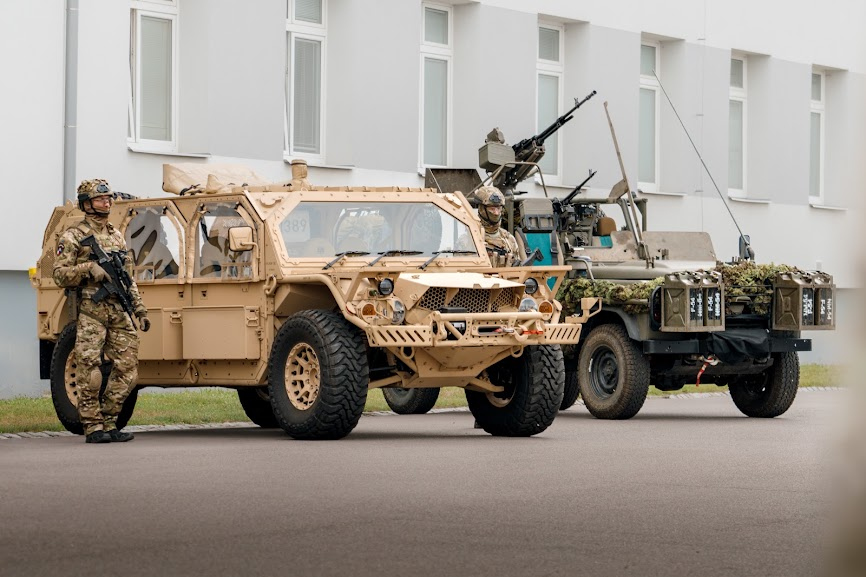
For the 43rd Airborne Regiment, this represents a major improvement in mobility. The Czech Armed Forces stated in 2023 that the light assault vehicles were intended to replace the ageing Land Rover Defender 130 Kajman fleet, which is used for combat and special tasks.
The newly acquired Flyers are therefore more than simply another vehicle type in the military fleet. For Czech paratroopers, they provide a capability directly linked to their core mission: to be fast, mobile and flexible, and to operate where heavier equipment may be unavailable or unsuitable.
Czech-specific integration and service support
The vehicles supplied by the United States are a new platform that must be adapted to Czech user requirements before becoming fully operational. This process includes the integration of communications equipment, any required weapon mounts, ballistic protection, national communications systems and other equipment in accordance with the Czech Armed Forces' final specification.
Logistical and service support will also be an important part of introducing the platform. The vehicle is designed to be as straightforward as possible to operate and maintain and to have the smallest possible logistical footprint. Since 2021, Flyer Defense's Czech industrial partner has been STV GROUP, which has presented the vehicle to the public at events including NATO Days in Ostrava.
The gradual introduction of the vehicles into service will therefore involve more than taking delivery of the equipment itself. Equally important are approval and formal introduction into service, training drivers and crews, establishing maintenance support, securing spare-parts supply, completing the vehicles' Czech-specific fit and integrating them into airborne tactics.
A new level of mobility for paratroopers
The Flyer 72 HD reflects the direction in which modern airborne and special operations units are moving. It is not simply about having a fast vehicle. It is about the ability to carry a small team, together with its weapons, ammunition, communications equipment and supplies, into the mission area; keep it moving; enable it to respond quickly; and, when necessary, reconfigure the vehicle for a different role as the situation develops.
For the 43rd Airborne Regiment, the Flyer 72 HD is first and foremost a mobility asset. It enables faster movement, longer reach, greater payload and a broader range of configurations than the ageing platforms it replaces. Combined with the training of Czech paratroopers, it can significantly enhance the regiment's ability to operate independently, move rapidly and deliver greater fire support.
The Flyer 72 HD is therefore more than a new vehicle for Czech paratroopers. It is a platform that will help them make better use of the qualities most important to airborne units: speed, surprise, courage, self-reliance and the ability to accomplish the mission in demanding conditions.
Author: Maj Richard Maňásek
Interested in Serving with the Czech Land Forces?
The Czech Land Forces offer dozens of roles in combat and specialist units across the Czech Republic. Find out where you can serve, which careers are available and how to take the first step.
Join the Czech Armed Forces Military careers Where you can serve Land Forces units

