- 18.7.2026
When soldiers enter an area where radiation, toxic chemicals or biological hazards may be present, they need specialists who can identify the threat quickly, assess the situation and recommend what to do next. Those specialists serve in Liberec.
The city beneath Ještěd is home to the 31st Radiation, Chemical and Biological Protection Regiment “Major General Oskar Starkoč”. Liberec’s CBRN specialists represent one of the Czech Armed Forces’ most distinctive capabilities. They conduct reconnaissance, detection and sampling, warn units of hazards and decontaminate personnel, equipment, materiel and terrain.
For prospective recruits, Liberec combines military training, natural sciences, modern technology and international cooperation. Alongside CBRN specialists, the regiment also needs drivers, mechanics, electromechanics, communications personnel, medics, logisticians, cooks and staff personnel.
The garrison is located in a regional city of more than 100,000 inhabitants. Liberec offers schools, a technical university, a hospital, sport, culture and public transport, while Ještěd and the Jizera Mountains begin practically at the edge of the city.
The only specialised regiment of its kind
The 31st Radiation, Chemical and Biological Protection Regiment is a specialised Czech Land Forces unit focused on protection against weapons of mass destruction and other toxic or radioactive substances. Its capabilities protect personnel, equipment and materiel, helping units continue their missions even in hazardous environments.
Liberec is home to the regimental command and staff as well as the 311th and 312th Radiation, Chemical and Biological Protection Battalions. Both battalions have their own command elements, CBRN defence companies, support elements and specialists assigned to demanding technical tasks.
The regiment also includes the 314th Weapons of Mass Destruction Warning Centre. It monitors and evaluates the radiological, chemical and biological situation in the Czech Republic and abroad and provides early warning. Its main facility is located in Hostivice-Břve, with additional workplaces elsewhere in the country.
The regimental command in Liberec directs specialist preparation, training, deployments and cooperation between the regiment’s components. It offers roles for soldiers who can plan, work with information, coordinate specialist teams and make decisions in situations where delay or error could have serious consequences.
Reconnaissance, detection and warning
When a hazardous substance is suspected, the first task is to determine what is present in the area. CBRN reconnaissance identifies and marks contaminated locations, measures the level of danger and passes the information to commanders. Based on the results, commanders decide how to protect personnel, move units and proceed with the mission.
A reconnaissance specialist must be able to operate detection and measuring equipment, navigate in the field, use protective equipment and record results accurately. The work is often carried out by a small team that must move quickly, take measurements and leave the hazardous area safely.
Some situations require samples to be taken for more detailed identification. Soldiers must follow an exact procedure, prevent contamination of the sample and ensure its safe handover for analysis. The work combines military discipline with principles of chemistry, biology, physics and laboratory practice.
Information is valuable only if it reaches the people who need it quickly. Communications, data evaluation, reporting and warning threatened units are therefore essential parts of the job. A CBRN specialist must be able to turn a technical finding into a clear recommendation for a commander.
Decontamination of personnel, equipment and terrain
If contamination occurs, decontamination teams are deployed. Their task is to remove or reduce hazardous contamination from personnel, clothing and equipment, vehicles, materiel, terrain or buildings so that safe activity can resume.
Decontamination is not ordinary washing. It requires correct identification of the substance, selection of a suitable procedure, preparation of the worksite, protection of the operators and verification of the result. Soldiers use specialist equipment, decontamination agents, water and precisely defined procedures.
Personal decontamination and the care of casualties are particularly sensitive. The team must act quickly while preventing contamination from spreading to other people or into a clean area. Close cooperation between CBRN specialists, medics and other emergency responders is essential.
Working in protective clothing and a mask is physically and mentally demanding. It restricts movement, vision, communication and the body’s ability to release heat. Soldiers therefore learn to manage their energy, monitor their colleagues and complete the task safely in heat, cold or rain.
Careers for scientists, technicians and drivers
The Liberec garrison may appeal to applicants interested in chemistry, biology, physics, environmental protection or measuring technology. Roles are available for reconnaissance specialists, decontamination specialists, sampling teams and personnel involved in evaluating the radiological, chemical and biological situation.
The regiment does not, however, depend only on specialists in protective suits. It needs drivers, mechanics and electromechanics to keep specialist vehicles and equipment operational. Communications personnel ensure the flow of information, logisticians provide supplies and transport, and medics are ready to assist during training and real incidents.
Professions found at every larger military unit are also important to the daily operation of the barracks and the regiment: cooks, warehouse personnel, administrative staff, human resources specialists and others. The specific range of vacancies changes according to the regiment’s current needs.
A technical or science education is an advantage, but it is not the only route. The armed forces provide specialist courses and training for work with specific equipment and procedures. Applicants must above all meet recruitment requirements, be medically fit and be willing to learn and work accurately.
Responsibility is exceptionally important in CBRN defence. An incorrect measurement, a missed procedure or improperly fitted protective equipment can endanger the entire team. Attention to detail is not an administrative requirement here; it is the foundation of safe mission accomplishment.
Training at home, abroad and with civilian emergency services
Liberec’s CBRN specialists regularly train in the Czech Republic and with international partners. They prepare to operate in allied formations, support combat units, protect airfields and other critical sites, and deploy in a multinational environment.
Training scenarios may simulate a release of an unknown substance, contaminated equipment, the discovery of an illegal laboratory or exposed personnel. Soldiers practise reconnaissance, sampling, setting up a decontamination site, treating equipment and reporting information to a commander.
Alongside specialist preparation, every soldier must master marksmanship, tactics, physical training, first aid, communications and living in field conditions. A CBRN specialist remains a soldier and must be ready to protect themselves, their team and their assigned equipment.
The regiment also cooperates with the Czech Integrated Rescue System and can support civilian agencies during emergencies. Capabilities developed for military operations are equally valuable in an industrial accident, the discovery of a hazardous substance or another crisis.
Frequent international cooperation offers opportunities for professional development, language training and experience from exercises or operations abroad. At the same time, soldiers must be prepared for longer periods away from their families and for deployment wherever their specialist capability is needed.
A regional city with trams and a wide range of housing
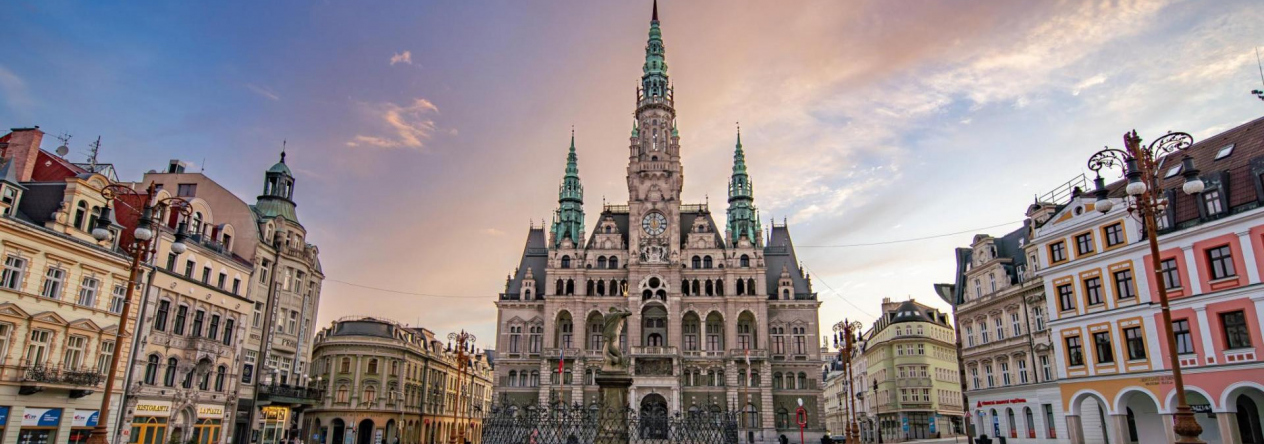
Liberec is the centre of the Liberec Region and one of the largest cities in the Czech Republic. It lies between the Ještěd Ridge and the Jizera Mountains, close to the borders with Poland and Germany. Its location gives it a distinctive mountain character while opening employment and leisure opportunities across the wider cross-border region.
City transport is provided by buses and trams. The tram network connects Horní Hanychov, the railway station, the city centre, the zoo and botanical garden area, Lidové sady, Vratislavice and the neighbouring city of Jablonec nad Nisou. When choosing accommodation, it is worth comparing connections to the specific workplace and their availability during shift hours.
Housing can be found in the city centre, Rochlice, Ruprechtice, Pavlovice, Hanychov, Vesec, Vratislavice and other parts of Liberec. Stráž nad Nisou, Chrastava, Jablonec nad Nisou and other nearby communities are alternatives.
Each location offers a different balance of price, commuting time, services and proximity to nature. Some people choose a flat with easy access to the centre, while others prefer a family home on the edge of the city. Because Liberec is hilly, residents should also plan for winter conditions and allow suitable vehicle equipment and extra time when commuting.
Long-distance buses and the main road via Turnov and Mladá Boleslav provide the principal connection to Prague. Rail services link Liberec with surrounding towns, although their usefulness depends on the specific route. For daily travel in the region, it is therefore sensible to compare train, bus, city transport and private car options.
Liberec has an extensive network of nursery, primary and secondary schools. Families can choose from facilities in different parts of the city, but admission must always be checked according to catchment areas, capacity and current enrolment conditions.
A major advantage is the Technical University of Liberec with its seven faculties. It offers programmes in mechanical engineering, textiles and materials, mechatronics, information technology, economics, education, architecture, art and health studies. Soldiers can continue their education there, while their partners may find study or employment opportunities.
The city is home to a regional hospital and other healthcare facilities, public authorities, shops and services needed for everyday life. Liberec also forms a shared employment area with Jablonec nad Nisou and other nearby towns and communities.
Families can benefit from the combination of urban facilities and quick access to nature. A school day, work and routine responsibilities can be complemented by sport or an outing without lengthy travel to another region.
When choosing accommodation, it is useful to check not only price and commuting time, but also the location of schools, parking, the gradient of access roads and winter maintenance. Conditions can vary significantly between the city centre, housing estates, mountain-edge districts and surrounding villages.
Ještěd, the Jizera Mountains, sport and culture
Ještěd is the city’s defining landmark. Hiking routes, ski slopes and cycling trails can be reached from Liberec within a short time. The Jizera Mountains offer running, hiking, mountain biking, cross-country skiing and other activities throughout the year.
Sports facilities also include the Vesec complex, the municipal swimming pool, an ice stadium, a multifunctional arena and numerous clubs and sports grounds. Liberec suits people who want to maintain their fitness outside official military physical training.
Families with children can visit the zoo and botanical garden, the iQLANDIA science centre, museums, galleries and leisure centres. Cultural life also includes the F. X. Šalda Theatre, concerts, cinemas and city festivals.
The proximity of the mountains is a major advantage, but it also brings changeable weather, higher rainfall and a longer winter season than in the lowlands. Those who enjoy snow, skiing and a mountain environment will find exceptional opportunities in Liberec. Those who prefer a warmer climate should expect some adjustment.
Who Liberec is a good choice for
Liberec may suit applicants who want to combine military service with natural sciences, modern technology and practical support to other units. The 31st Regiment offers expertise that matters during military operations, in the protection of allies and during emergencies in the Czech Republic.
The service will appeal to people who work accurately, follow procedures and remain calm while wearing protective equipment or handling an unknown substance. Technical thinking, an interest in chemistry or biology, physical resilience and a willingness to continue learning are valuable qualities.
Roles are not limited to CBRN specialists. The regiment needs drivers, mechanics, electromechanics, communications personnel, logisticians, medics, cooks and staff personnel. Every one of these professions helps the specialist team reach the scene, work safely and complete its mission.
Outside service, Liberec offers the advantages of a large regional and university city together with immediate access to the mountains. Families have schools, healthcare, employment, culture and sport, while soldiers can spend a day off on Ještěd or in the Jizera Mountains.
Liberec is therefore more than the city beneath its famous tower. It is a garrison of specialists whose measurements, judgement and precise work are relied upon by other soldiers and allies. For someone seeking a demanding specialisation, international experience and an active life in northern Czechia, it can be an excellent choice.
Author: Major Richard Maňásek

