- 29.5.2026
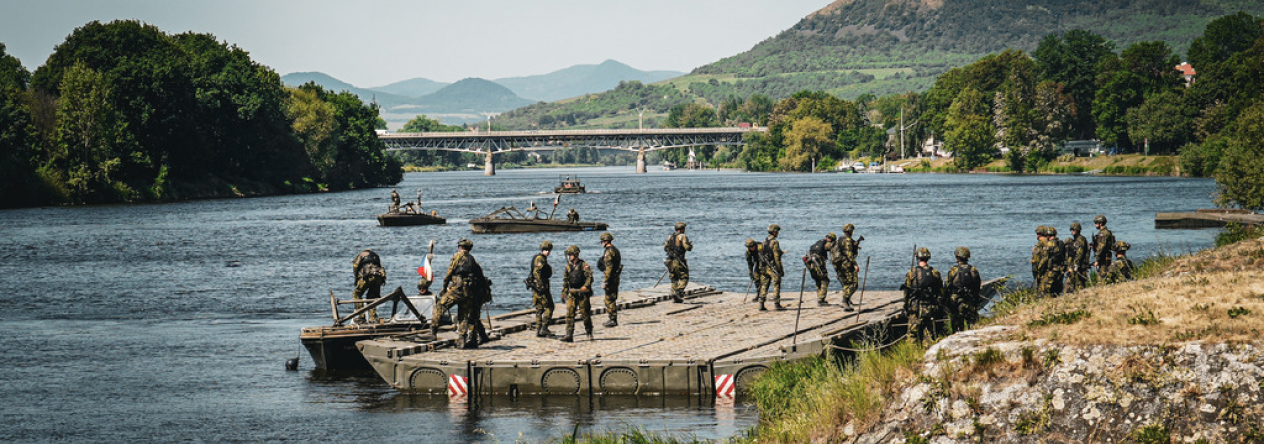
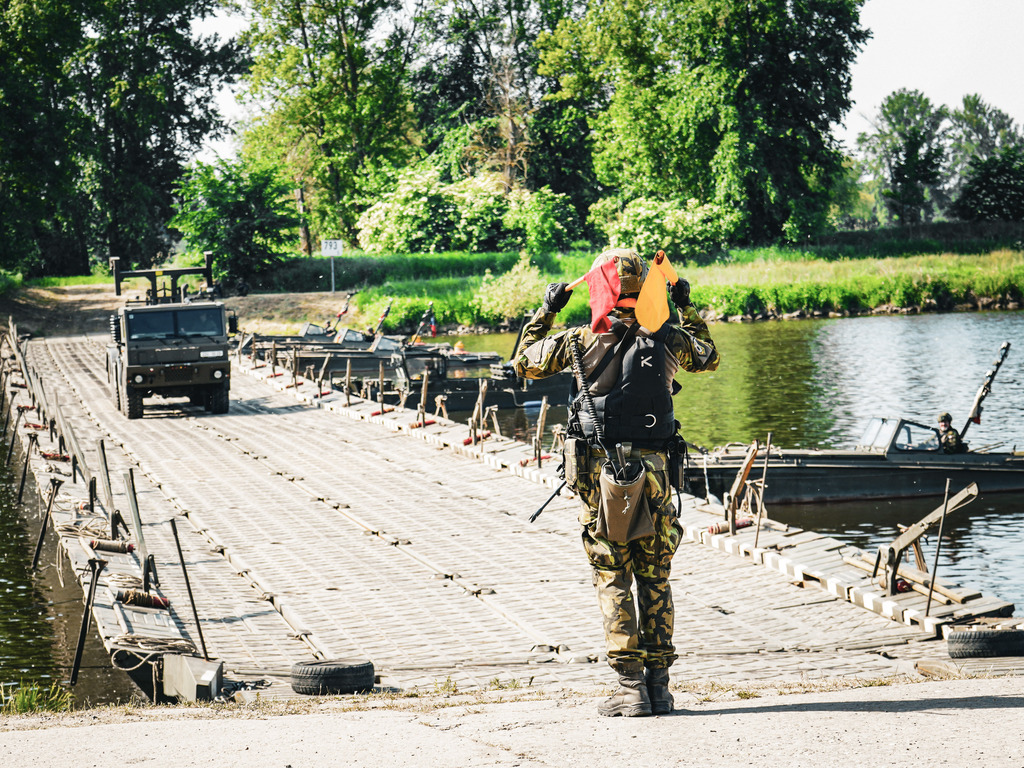
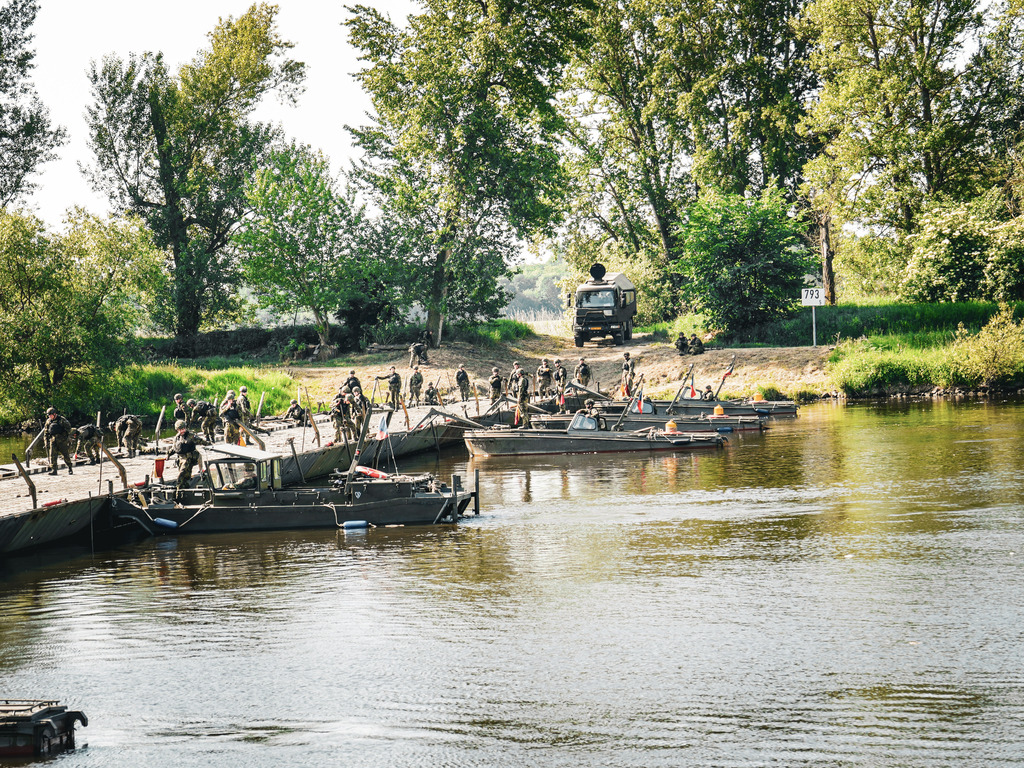
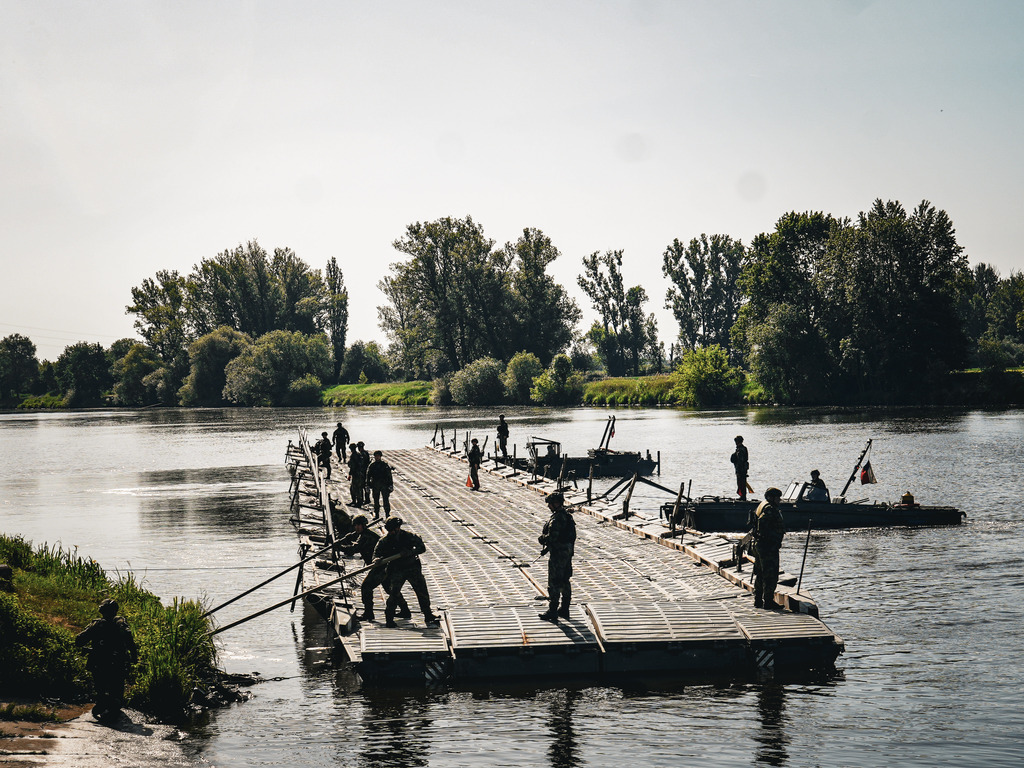
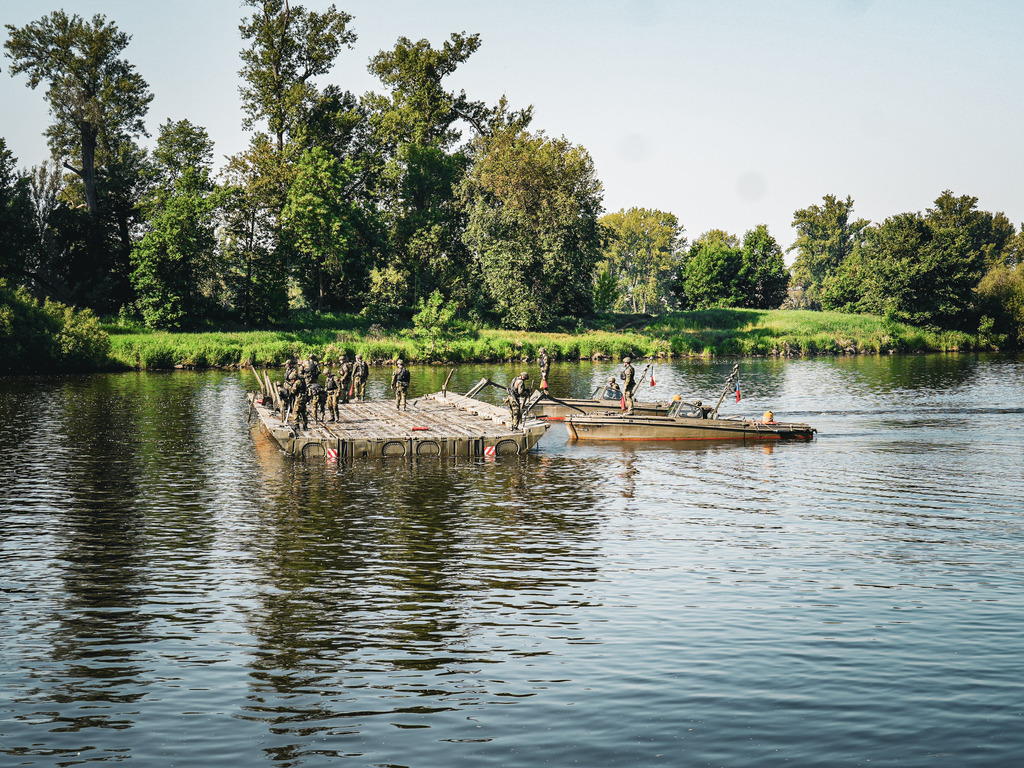
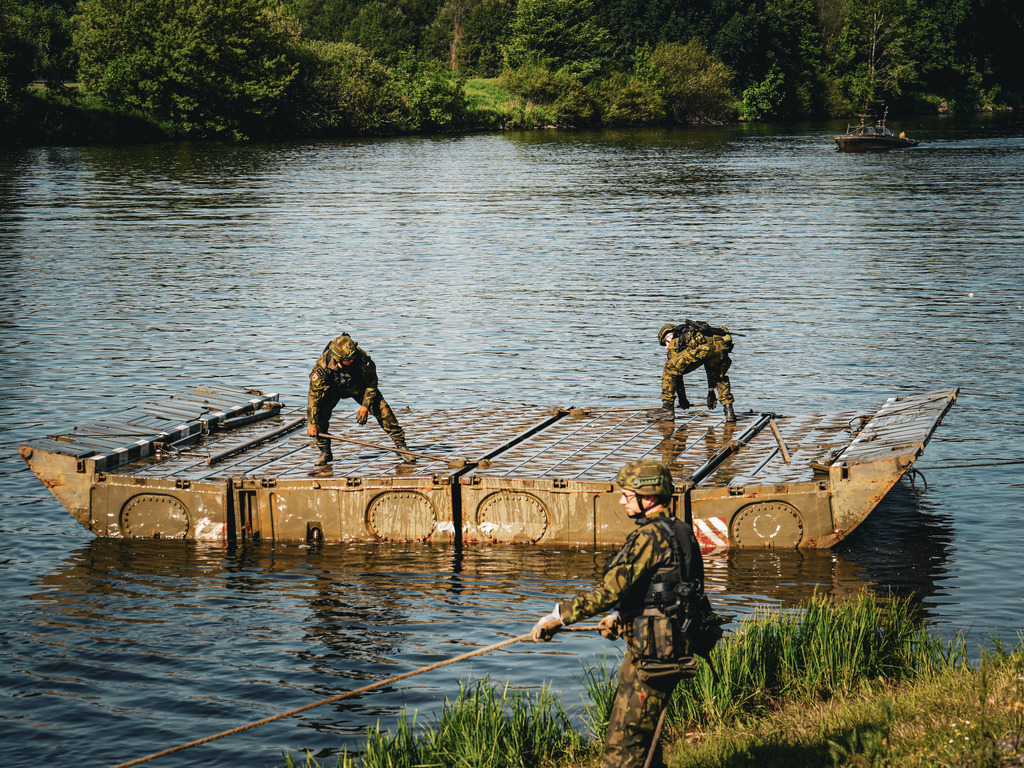
The 152nd Engineer Battalion trained on the Elbe at Litoměřice from 18 to 29 May. At the New Water Training Area, boat engines roared, heavy vehicles moved along the banks and the river became the setting for intensive engineer training. Personnel practised building pontoon ferries and bridges, one of the engineer force's most complex and valuable capabilities.
Crossing a water obstacle may appear straightforward at first sight. In reality, it is exceptionally demanding, bringing together precision, experience, speed, physical work and teamwork. Every movement on the bank and on the water has its place. Every command must come at the right time. Every boat, pontoon section, vehicle and soldier contributes to a shared task: opening a route where the river naturally closes it.
The 152nd Engineer Battalion's exercise, under Lieutenant Colonel Jan Albrecht, focused on building pontoon ferries and bridges to cross a water obstacle. At Litoměřice, that obstacle was the Elbe: a river with a strong current, changing conditions and a long association with engineer training. Such an environment allows soldiers to practise standard procedures and responses to situations that change minute by minute on the water.
“Training on the water has its own particular demands. Knowing the equipment and procedures is not enough: soldiers must be able to work with the current, space, time and risk. The exercise aimed to coordinate the pontoon company, Active Reserve personnel and supporting elements so that we could become even more confident in constructing water-crossing equipment,” said Lieutenant Colonel Jan Albrecht, Commander of the 152nd Engineer Battalion.
Dozens of soldiers took part. Alongside the battalion's regular pontoon company, its Active Reserve pontoon company also participated. Joint training for regular soldiers and reservists was essential. River-crossing capability cannot be maintained through theory alone. It requires regular practical training, coordination, familiarity with equipment and trust between squads when unexpected incidents occur and soldiers need to be rescued from the water.
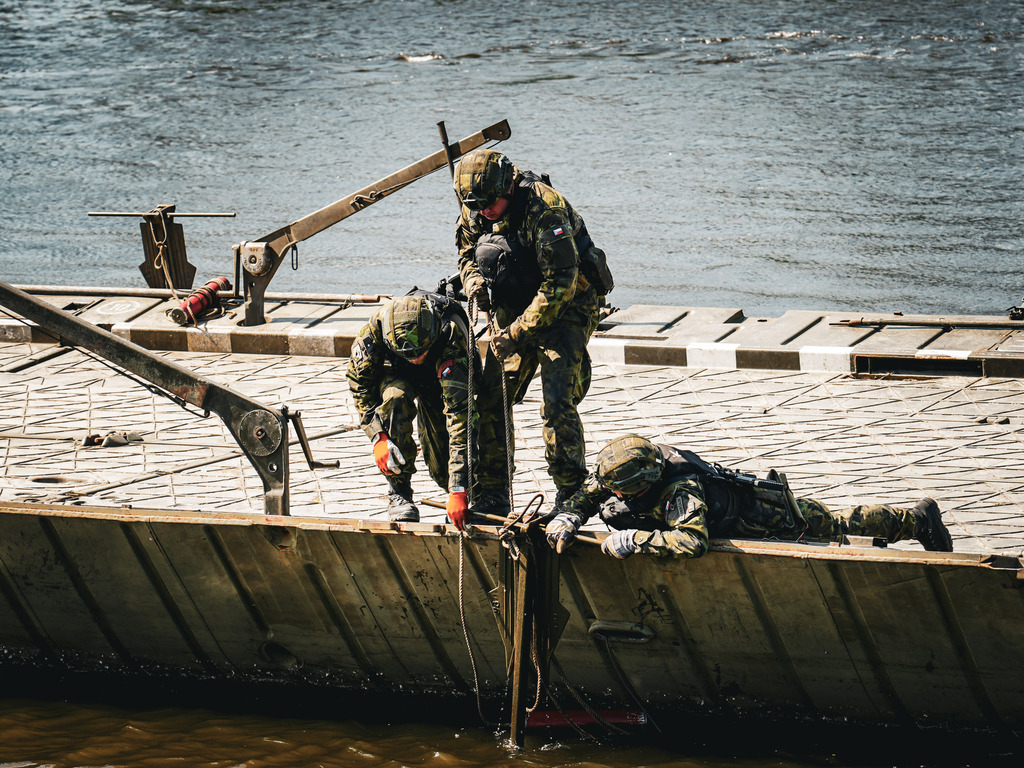
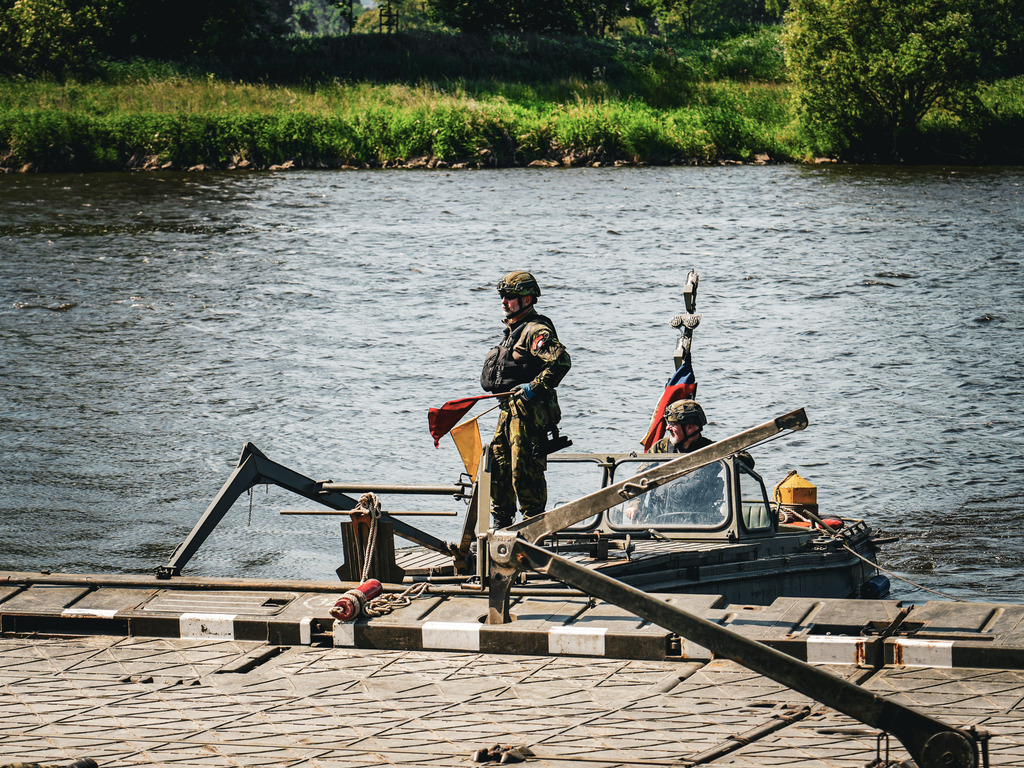
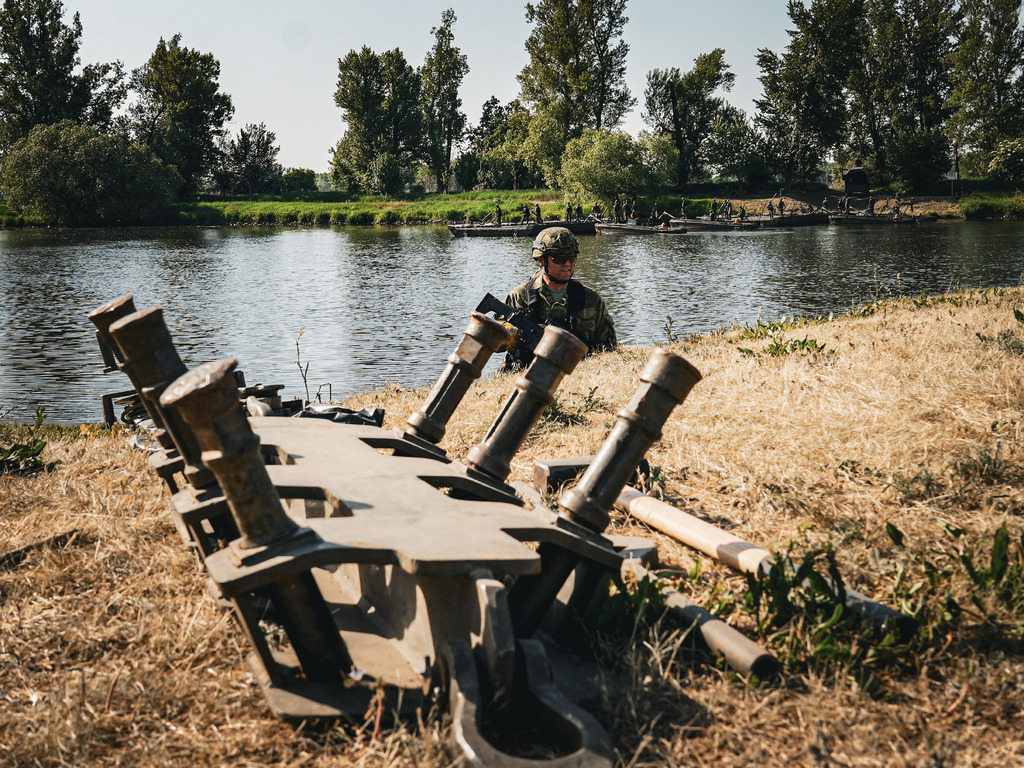
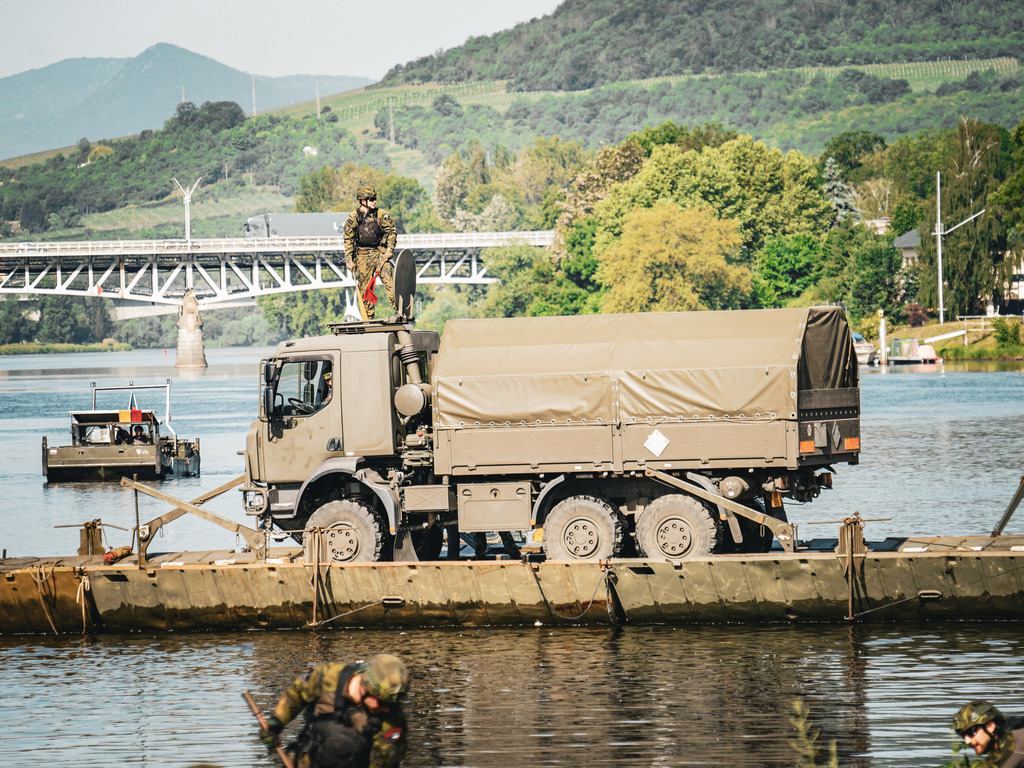
Soldiers used motorboats, the Veronika MO-2000 boat, inflatable boats, PMS pontoon bridge sets, hooklift vehicles and Tatra T810 vehicles. Together, these formed a system that must operate precisely and reliably. Equipment alone is not enough, however. The decisive factor is the person operating it, who understands its capabilities and can use it safely in river conditions.
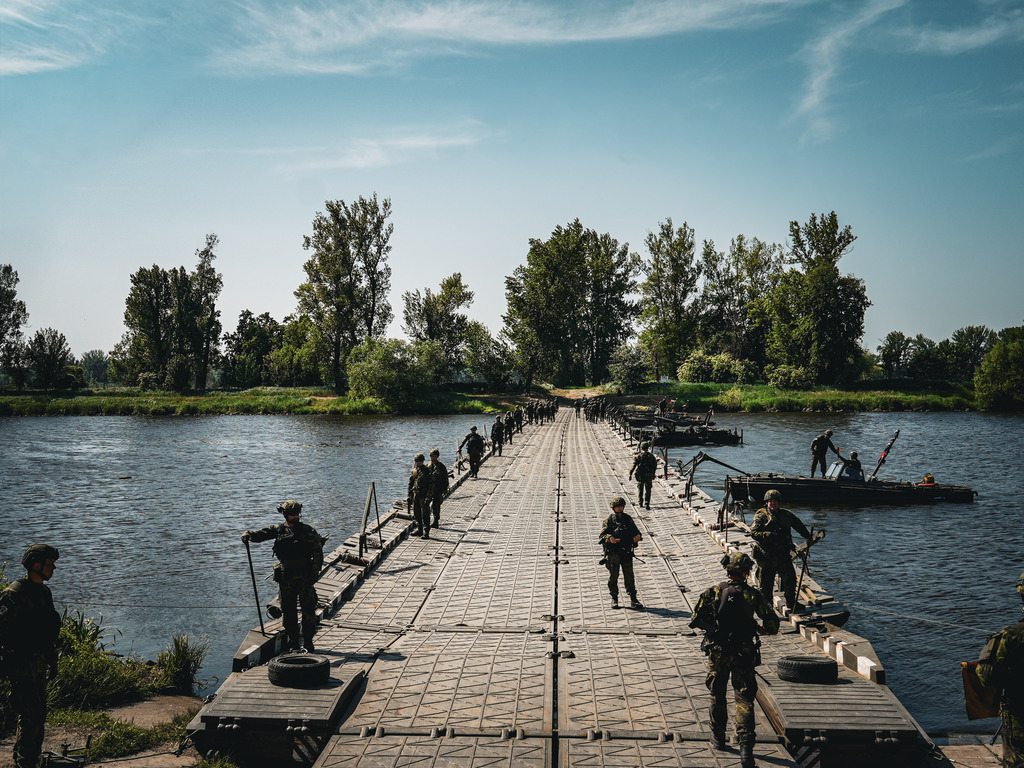
This makes pontoon training distinctive. It involves more than transporting material or mechanically assembling a bridge. It develops the ability to create a working crossing quickly over an obstacle that would otherwise slow or halt unit movement. A pontoon ferry carries people, vehicles and equipment to the far bank. A pontoon bridge can temporarily replace missing or damaged infrastructure. In combat or a crisis, this capability may determine an operation's tempo, access to assistance or the ability to continue the mission.
This expertise matters beyond the Czech Armed Forces. Crossing water obstacles quickly and safely is also an important part of engineer support within the Alliance. During joint deployments, it can support the movement of Czech and Allied NATO units. Czech engineers therefore offer a capability valuable at home and within wider Allied cooperation.
“Engineers are often the people who enable other units to continue their activities. Water crossing is a capability with considerable specialist value and a practical effect on the entire force. What the soldiers practised in Litoměřice is not an isolated skill belonging to one unit. It is a capability the Czech Armed Forces can use to support their own forces and their allies,” said Colonel Jiří Machoň, Commander of the 15th Engineer Regiment.
The exercise on the Elbe followed a clear sequence: preparing equipment, launching boats, handling pontoon components, joining sections, ensuring stability, controlling movement on the water and positioning equipment correctly. Each activity led into the next. Wheeled vehicles operated on the banks, boat crews worked on the river and communication between them continued throughout. The value of training becomes clear where neither the current nor the weather waits for ideal conditions. Regular soldiers from the 44th Light Motorised Battalion and the Regional Military Command in Liberec also joined the training.
Pontoon personnel need to test their procedures and confidence repeatedly. On the water, errors quickly compound. An inaccurately positioned pontoon section, a poorly timed manoeuvre or a delayed response can affect the entire team's work. Training therefore emphasises discipline, concentration and anticipation. The objective is not simply a completed task, but a unit whose members know they can rely on each other. Medical personnel and divers provided training safety support and were ready to intervene if required.
Active Reserve personnel played an important role. Their participation confirmed the need to develop specialist engineer capabilities across the whole system. Reservists took part directly in practical activities requiring experience and repetition. Working alongside regular soldiers also strengthens the unit's ability to function as a single force, regardless of whether its members serve in the regular force or the Active Reserve.
“A pontoon engineer learns above all through practice. They need to know how the equipment will behave, what the current will do and how others' activities connect with their own work. Confidence comes from repetition and joint training. That was what mattered most at Litoměřice,” Lieutenant Colonel Albrecht added.
Alongside specialist training, the exercise included a significant symbolic moment. During a demonstration day for a specialist audience, commanders of the former Litoměřice training base met today's soldiers at the New Water Training Area. In a place where engineer expertise had developed over many years, the past and present came together naturally as current personnel continued their predecessors' work.
This was more than a reflection on history. It demonstrated the continuity essential to specialist military capabilities. Equipment is modernised, procedures develop and the operational environment changes. The foundation remains the same: a well-trained soldier, a cohesive team and the ability to complete a task in demanding conditions.
“Litoměřice has exceptional significance for the engineer force. The meeting between former commanders and today's soldiers showed that tradition here is more than a word. It is experience passed to the next generation of engineers, who develop it for the needs of today's armed forces,” Colonel Machoň said.
The twelve-day training at the New Water Training Area tested more than equipment. It demonstrated the ability to plan, control and conduct complex engineer activities in a real environment. It confirmed the value of cooperation between regular soldiers and the Active Reserve, and showed that water crossing is one of those capabilities not seen every day, but which can be vital at the right moment.
When pontoon sections join on the Elbe and a route opens between its banks, the essence of engineer work becomes visible. Engineers cross more than a river: they overcome an obstacle between a task and its completion. That is why the 152nd Engineer Battalion's training at Litoměřice matters to the unit, the Czech Armed Forces as a whole and their allies.
Author: Capt Petra Mikšíková
Interested in Serving with the Land Forces?
The Land Forces offer dozens of roles in combat and specialist units across the Czech Republic. Explore where you can serve, which roles are available and how to take your first step.
How to Become a Soldier Military Roles Where You Can Serve Land Forces Units

