- 21.9.2026
More than 27 tonnes, six driven wheels, an armoured hull and an engine producing over 500 horsepower: at first sight, TITUS may look like another heavy armoured vehicle. Its most important capability, however, is largely invisible from outside. The TITUS KOVS wheeled armoured communications vehicle provides something modern units cannot operate without: reliable communications and rapid information transfer.
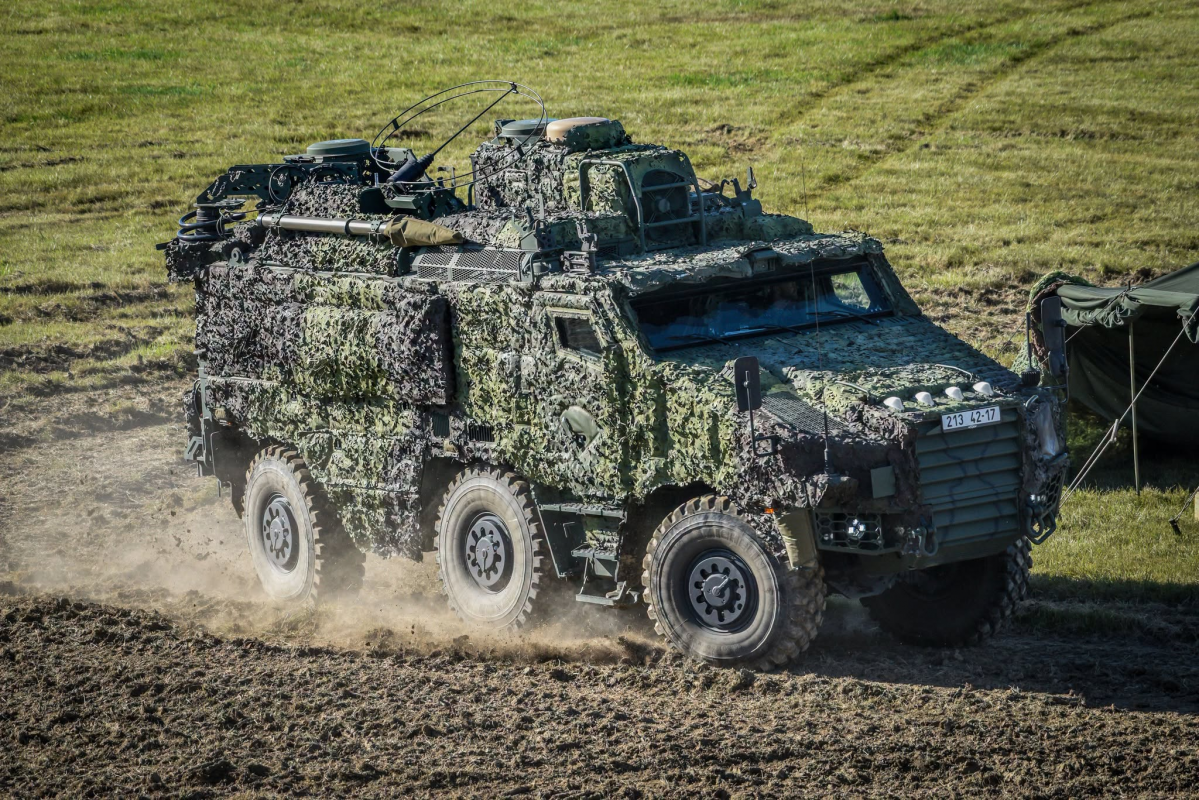
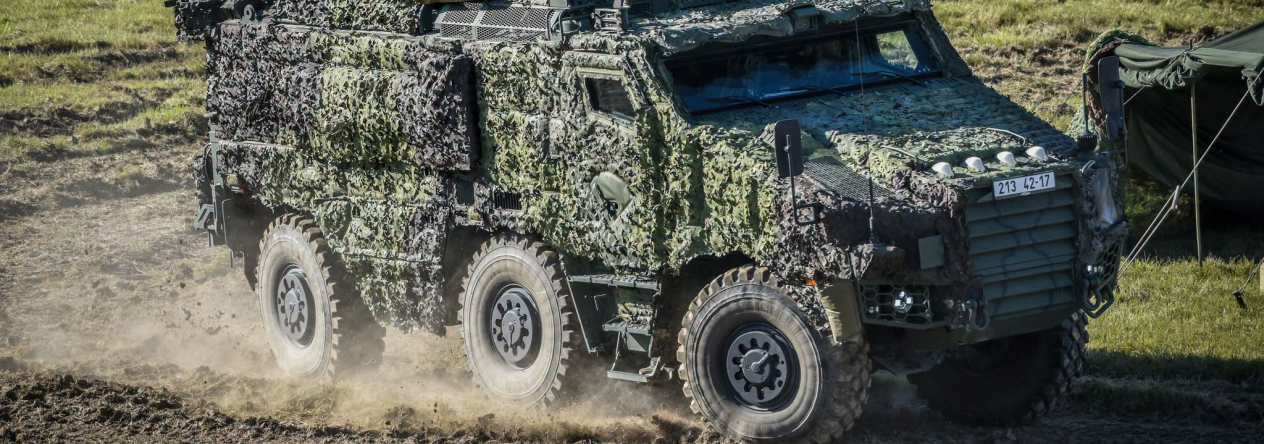
At this year's NATO Days, TITUS KOVS also featured in a separate five-minute dynamic demonstration. As the vehicle showed its mobility and handling in the arena, the commentary explained the capabilities within its armoured hull. This is where equipment connects command posts, higher headquarters and units operating directly in the operational area.
KOVS stands for the Czech designation kolové obrněné vozidlo spojovací, meaning wheeled armoured communications vehicle. Its task is to provide communications and information support for command and control. On today's battlefield, detecting an adversary or possessing powerful weapons is not enough. Reconnaissance information must reach the commander, decisions must reach subordinate units and requests for support must reach the elements able to respond. Without reliable communications, these capabilities would remain disconnected.
TITUS KOVS therefore serves as a protected mobile communications node. It contains radios, radio-relay equipment, satellite communications, data terminals and operator workstations. Combining different communications methods allows voice and data links to be established and maintained between elements as conditions require. From the stands, visitors mainly see antennas, armour and the substantial chassis; the essential work takes place inside.
Communications Must Follow the Units
High mobility is important for KOVS. It is not a static communications station deployed in one location for several days. The vehicle must move with units, change position and re-establish the required links after moving.
The Czech TITUS uses a three-axle TATRA 6×6 chassis. It is approximately 8.2 metres long, has a combat weight exceeding 27 tonnes and is powered by a six-cylinder Cummins engine producing 373 kW, or more than 500 horsepower. Despite its size, it remains manoeuvrable. Both the front and rear axles steer, reducing the turning radius and making movement in confined spaces easier.
Visitors could see this capability during the separate dynamic demonstration. TITUS showed its movement and handling, although its principal role is neither rapid manoeuvre nor direct combat. Mobility allows it to provide communications where units actually need them.
On roads, TITUS can reach up to 95 kilometres per hour and has a range of approximately 600 kilometres. It is not restricted to surfaced routes: its chassis allows off-road operation and obstacle crossing appropriate to deployment with combat units.
Mobility Supports Survivability
The ability to change position quickly has an additional significance for communications equipment. Transmissions and prolonged operation from one location can increase the risk of detection. Establishing communications, leaving a position after a period and restoring links elsewhere therefore supports protection and survivability as well as mobility.
The vehicle also provides ballistic and mine protection for its crew. Its equipment includes the STAR Light 3 protective jammer against radio-controlled improvised explosive devices. For immediate threats, KOVS can also be fitted with a 7.62 mm MINIMI machine gun at the commander's hatch.
Its principal task is nevertheless to maintain information flow between parts of a unit and ensure that the required information reaches its destination.
A Capability Hidden from View
The Czech Armed Forces began receiving their first TITUS vehicles in 2023. Of the 62 vehicles procured, 36 are the KOVS communications variant. They have since been introduced progressively into unit training, where soldiers test mobility and, above all, different communications and data-transfer capabilities.
This distinguishes TITUS KOVS from much of the equipment displayed at NATO Days. Visitors watching a tank see turret movement, speed or firepower. An infantry fighting vehicle demonstrates movement, protection and troop transport. The communications TITUS keeps its most important capability largely hidden.
Yet many other elements depend on it. Reconnaissance must pass on findings. A commander must receive reports, assess the situation and issue orders. A subordinate unit must request support, and that request must reach those able to provide it.
NATO Days therefore presented more than 27 tonnes of armoured equipment. TITUS KOVS demonstrated a capability that is not immediately visible, but without which modern units cannot function effectively.
Its main weapon is information rather than shells.
Author: Maj Richard Maňásek
Related information