- 20.9.2026
Combat vehicle engines start, two helicopters appear over the airport and information warfare specialists join the troops on the ground. The dynamic display “Assault on the Forward Edge of Defence” at NATO Days 2026 demonstrated cooperation between several parts of the Czech Armed Forces. Soldiers of the 74th Mechanised Battalion took the leading ground role.
Before thousands of spectators at Mošnov Airport, the scenario depicted an attack on prepared adversary defences. It demonstrated more than infantry fighting vehicles or individual weapons: success depended on precise timing and cooperation between units with different capabilities.
The display brought together the 74. mechanizovaný prapor “plukovníka Bohuslava Malečka” (74th Mechanised Battalion), specialists from the 91st Information Warfare Group and UH-1Y Venom crews from the 22nd Helicopter Air Base.
Establishing the Advantage
Before the mechanised unit began its decisive movement, information activities entered the scenario. Specialists from the 91st Information Warfare Group supported the planned attack in the information environment, helping create conditions for the mechanised unit to seize the initiative and continue its combat task.
Modern conflict extends beyond weapons and vehicles. Influencing an adversary's decisions, disrupting their willingness to resist or making it harder to understand the situation can affect an operation's outcome as significantly as unit movements.
Meanwhile, engine noise increased as the 74th Mechanised Battalion's mechanised platoon began to move.
BVP-2 Vehicles Advance
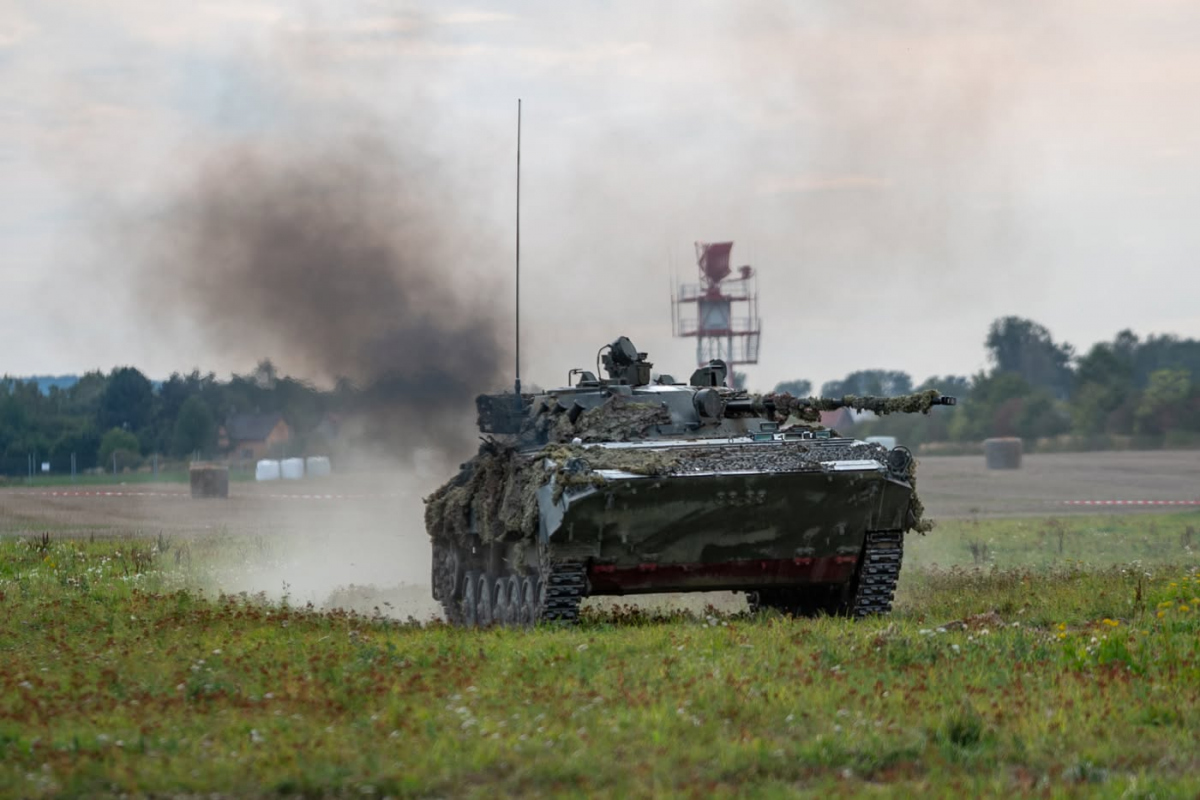
The BVP-2 infantry fighting vehicles accelerated towards the forward edge of the simulated adversary's defences. Their task was to transport soldiers into the combat area, protect them during movement and support their subsequent advance.
Commanders, vehicle crews and mechanised squads had to coordinate precisely. Each movement had a designated time and place. The vehicles used their mobility, changed direction and created conditions for the infantry to dismount.
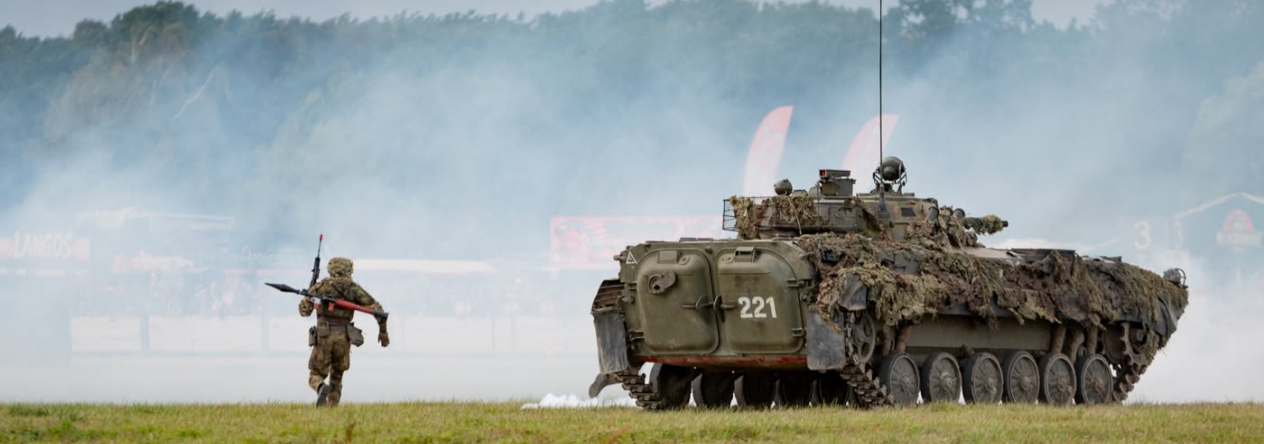
Once the unit reached the designated area, soldiers left their vehicles and continued the assault on foot. The BVP-2 vehicles remained in the formation, supporting the dismounted squads. Within moments, tracked vehicle movement and infantry activity combined across the open arena.
Spectators' attention then turned to the sky.
The Venoms Arrive
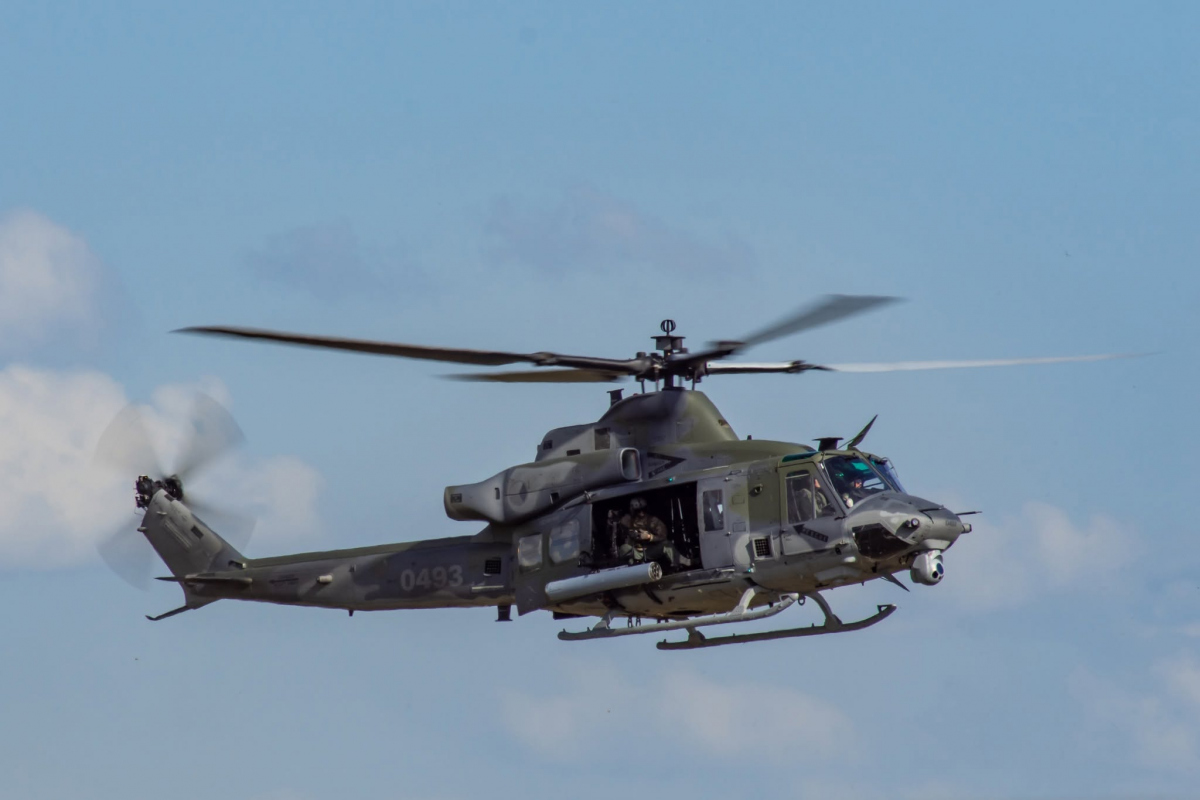
Two UH-1Y Venom utility helicopters approached at low altitude. Their arrival added another direction to the ground attack and increased the operation's tempo.
While one helicopter remained airborne to support the activity, the other landed briefly in the display area. Soldiers disembarked through its open doors and moved to their assigned positions under helicopter cover.
The landing lasted only as long as necessary. Dust rose around the aircraft as soldiers left and the Venom lifted off again. The inserted infantry then joined the unit advancing on the ground.
The mechanised platoon was no longer operating alone. BVP-2 movement, dismounted infantry, helicopter insertion and information activities combined in one area. Each element had its own task, with coordination between them proving decisive.
The Decisive Assault
With the necessary conditions established, the mechanised unit continued its assault on the forward edge of defence. Soldiers advanced with vehicle support and took control of the designated area. The Venom helicopters continued operating overhead before leaving the combat area after inserting troops.
The scenario lasted only a few tens of minutes. Behind the short demonstration lay extensive preparation, equipment movements, joint planning and coordination between units whose routine tasks differ.
BVP-2 crews had to coordinate movement with infantry activity. The helicopters had to approach safely, insert soldiers and depart while the mechanised assault continued on the ground. Information warfare specialists integrated their capabilities into the shared scenario to support the operation's principal objective.
The result was one coordinated display.
NATO Days' Best Land Demonstration
“Assault on the Forward Edge of Defence” was performed on both Saturday and Sunday. Against other dynamic displays, it won the Jiří Ruprecht Memorial award for the best land demonstration at NATO Days 2026.
Based on visitors' votes, the award went jointly to personnel of the 7th Mechanised Brigade, 91st Information Warfare Group and 22nd Helicopter Air Base.
The display's success showed that Land Forces capability cannot be judged by equipment types alone. Trained soldiers, coordinated crews, effective command and the integration of ground manoeuvre, air support and activity in the information environment are decisive.
Soldiers of the 74th Mechanised Battalion and their information warfare and air force colleagues demonstrated precisely this cooperation at Mošnov Airport.
Author: Maj Richard Maňásek