- 7.10.2026
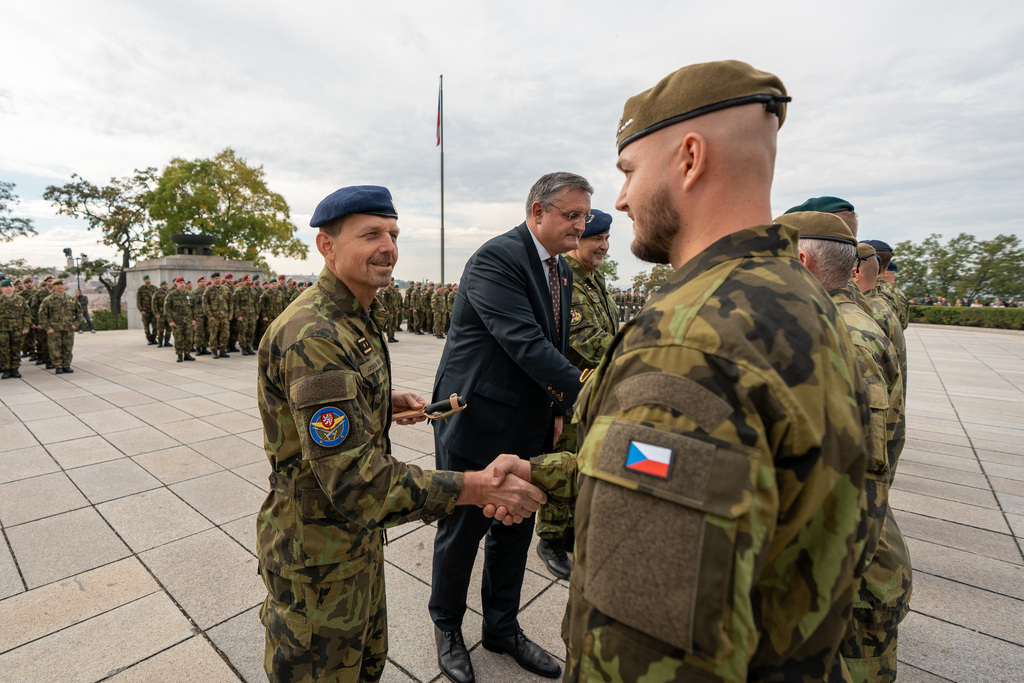
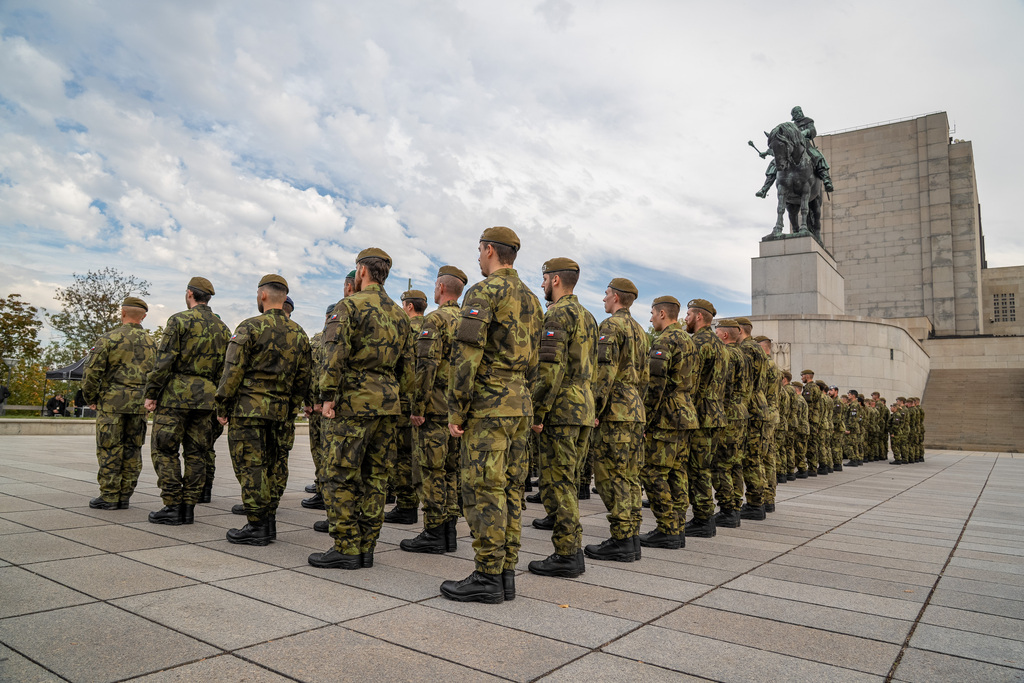
Military engineers prepared defensive positions and obstacles, reconnaissance troops gathered information about potential adversaries, and mechanised units trained in collective defence alongside Allied forces. After several months of deployment in Latvia, Lithuania and Slovakia, Czech soldiers returned home. On Wednesday, 7 October, they were honoured for their service in strengthening NATO's eastern flank during a ceremony at the National Memorial on Vítkov Hill in Prague.
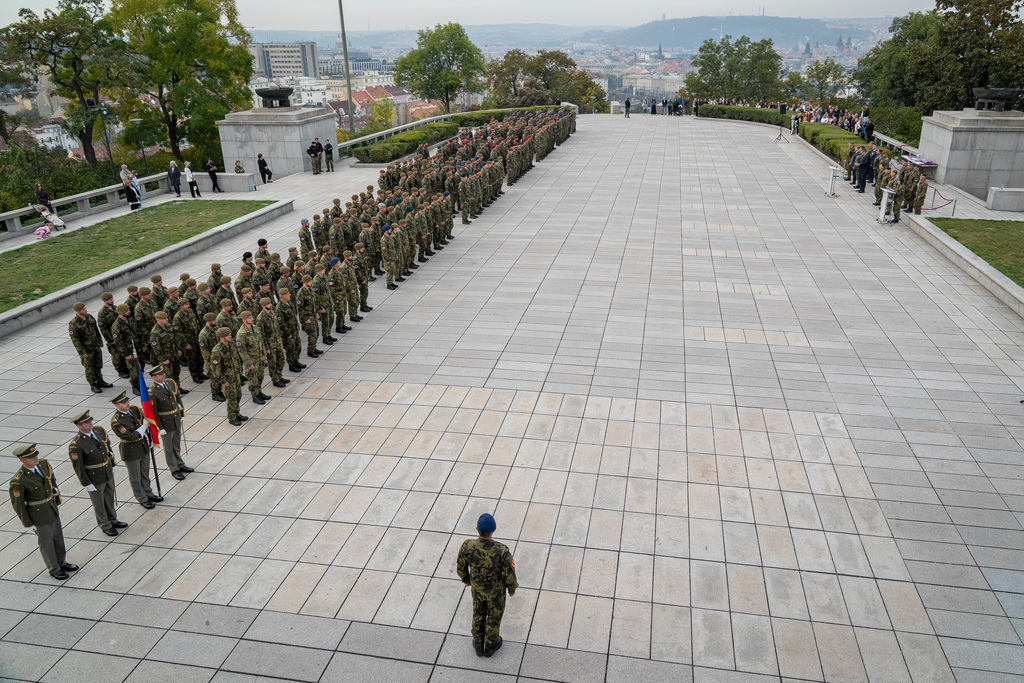
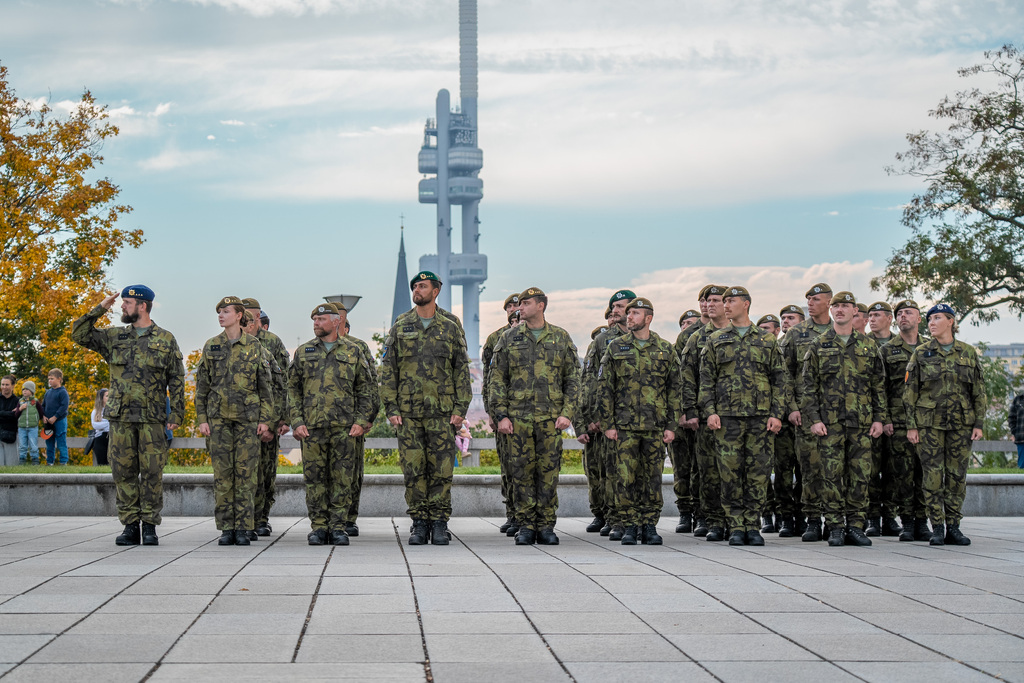
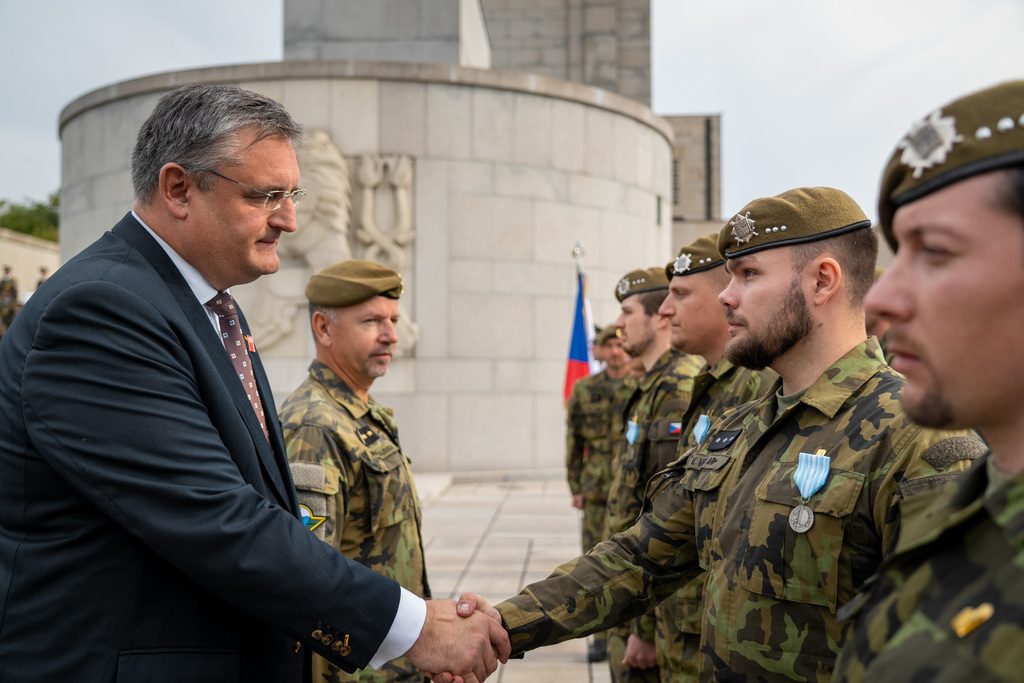
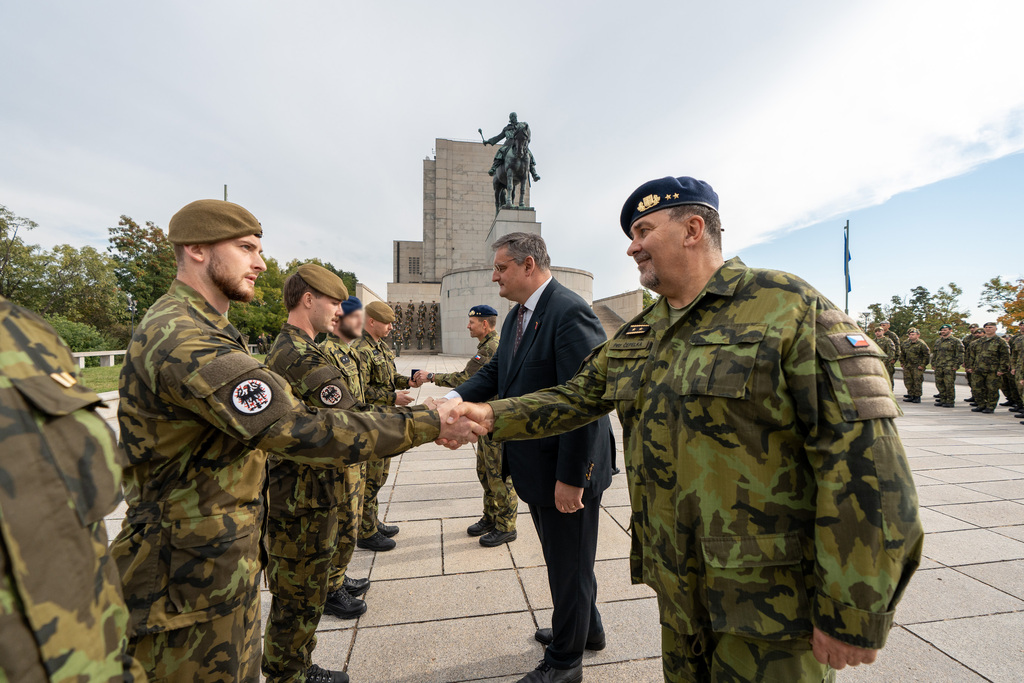
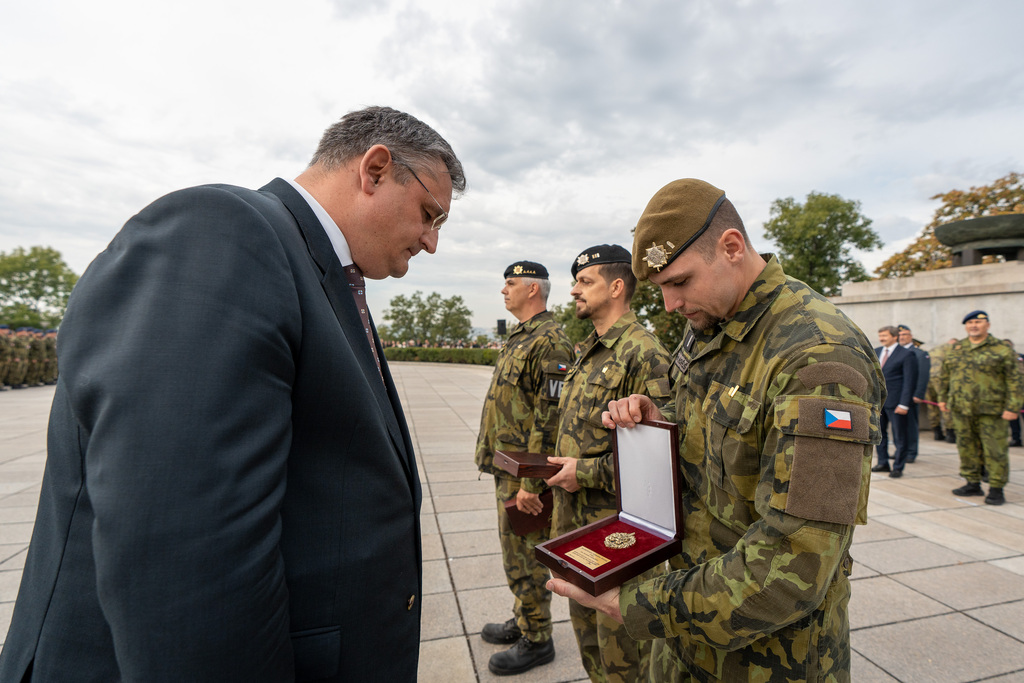
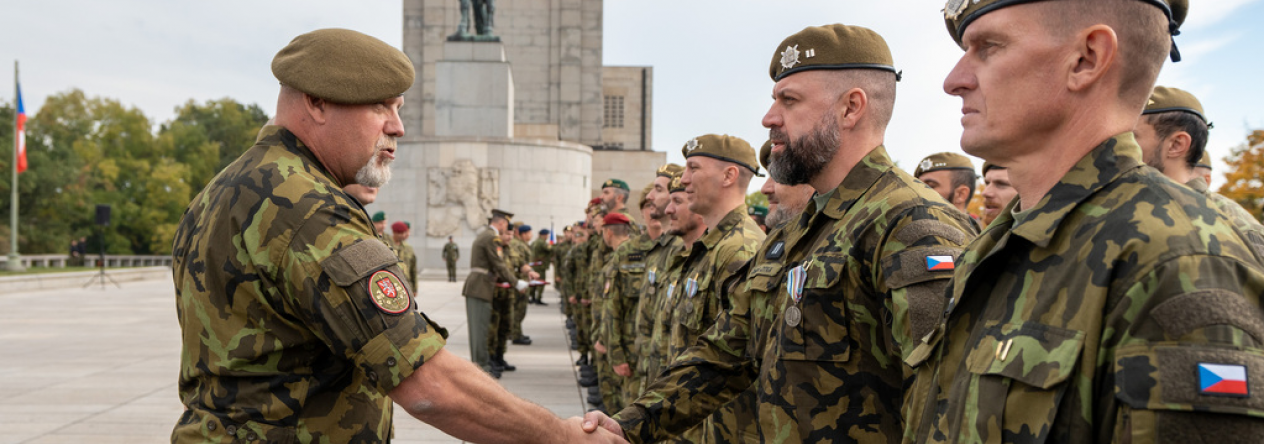
Personnel of the Czech Armed Forces and the Military Police who had served in overseas operations assembled in the ceremonial courtyard of the National Memorial. Deputy Minister of Defence René Schreier and Major General Petr Čepelka, First Deputy Chief of the General Staff of the Czech Armed Forces, thanked them for their service and for representing the Czech Republic with professionalism.
The ceremony marked the completion of their deployments on NATO's eastern flank, where they had worked alongside Allied units to strengthen the Alliance's collective defence.
Behind their return home lay months of intensive training, specialist tasks and daily cooperation with troops from other NATO member states. Czech Land Forces personnel served within multinational formations in which different units performed complementary roles. Military engineers enabled the movement and protection of friendly forces, reconnaissance troops supplied information essential to commanders' decisions, and mechanised units practised combined combat operations.
Military Engineers in Latvia: Enabling Friendly Movement, Restricting the Adversary
Personnel of the 153rd Engineer Battalion, based in Olomouc, served in Latvia as part of a Canadian-led multinational brigade. Their principal responsibility was to provide engineer support to Allied forces, including the preparation of defensive positions, construction of obstacles, engineer reconnaissance and support for the safe movement of friendly forces.
During Exercise Knight Sapper, Czech military engineers worked alongside their counterparts from Canada, Italy, Spain, Latvia and Albania. Training focused on harmonising procedures and conducting practical engineering tasks on an actual bridge structure. During Exercise Oak Resolve 2026, engineer units supported the multinational brigade as it transitioned to combat readiness, conducted movements and prepared defensive operations.
Engineer support is an essential component of modern land operations. A properly constructed obstacle can delay an adversary's advance, while a prepared route or passage allows friendly forces to maintain their manoeuvre. One of the main benefits of the deployment was the opportunity to coordinate these activities with other Allied units.
Reconnaissance Troops in Lithuania: Gaining Information Before the Adversary
In Lithuania, personnel from the 102nd Reconnaissance Battalion, named after General Karel Paleček and based in Prostějov, formed the core of the Czech Armed Forces' 7th Task Force. Operating within German-led multinational forces, they conducted reconnaissance missions and provided information necessary for planning and executing combat operations.
One of their most significant assessments was the certification exercise Freedom Shield, during which the Czech reconnaissance company worked with units from Germany, Croatia, the Netherlands and Norway. Reconnaissance troops practised operating in areas controlled by opposing forces, identifying important targets and passing information to support other units' combat operations. Their preparation also included communications and medical training, as well as operations under chemical threat conditions.
Particular attention was paid to unmanned systems. The ability to operate drones and collect information from the air expands the capabilities of reconnaissance units and reflects the requirements of the modern battlefield. In an environment where the speed of acquiring and transmitting information can determine the outcome of an operation, these capabilities are a vital part of modern reconnaissance.
Mechanised Units in Slovakia: Joint Training and Defence Readiness
Other Czech troops served at the Lešť Military Training Area in Slovakia, where they formed part of a Spanish-led multinational NATO brigade formation. A significant part of the Czech contribution consisted of personnel from the 42nd Mechanised Battalion, based in Tábor. Their deployment focused on strengthening their ability to operate alongside units from other Allied armed forces.
Training included tactical movements, combat operations, fighting in built-up areas and obstacle crossing. Czech soldiers cooperated with Spanish military engineers and Portuguese infantry troops, among others. These activities required the participating units to coordinate not only their tactics but also communications, command and control, and mutual support.
Exercise Strong Lineage 2026 was another important element of their preparation. It focused on testing the ability to rapidly reinforce Allied formations with additional forces. Alongside combat activities, the soldiers practised moving personnel and equipment, coordinating individual elements and integrating reinforcing units into the multinational formation. The ability to reinforce Allied forces quickly is one of the essential requirements of effective collective defence.
Collective Defence Does Not End at the Czech Border
In addition to land forces, Czech helicopter crews contributed to strengthening NATO's eastern flank in Poland. Their tasks included supporting the protection of Polish airspace and preparing to detect and potentially engage unmanned aerial systems. This deployment also reflected the growing importance of unmanned threats in contemporary armed conflicts.
The presence of Czech troops in multinational NATO formations is not only about improving individual military skills. Equally important is the ability to cooperate with Allies, apply common procedures and conduct operations under multinational command. The soldiers bring the experience gained abroad back to their parent units, where it becomes part of further training and preparation.
Major General Petr Čepelka emphasised the importance of this cooperation during the ceremony: “In Latvia, Lithuania, Poland and Slovakia, you demonstrated that the defence of the Czech Republic does not begin at our borders. It begins wherever we stand alongside our Allies to protect the security of the entire Alliance.”
The ceremony at Vítkov Hill provided an opportunity to thank the returning soldiers for their service, professionalism and the time spent away from home. Their families and loved ones, who supported them throughout their deployments, also deserve recognition.
While one rotation has completed its mission, other Czech soldiers continue to serve on NATO's eastern flank. Welcome home, and thank you for your service!
Author: Maj Richard Maňásek