- 17.9.2026
Exercise Crimson Lightning II tested the 43rd Airborne Regiment from the first landing to holding an assigned area. Airborne insertion, initial contact with an adversary, movement to an assigned area, defence against armoured vehicles, uncrewed systems, artillery fire and casualty evacuation formed linked scenarios simulating successive phases of a combat operation.
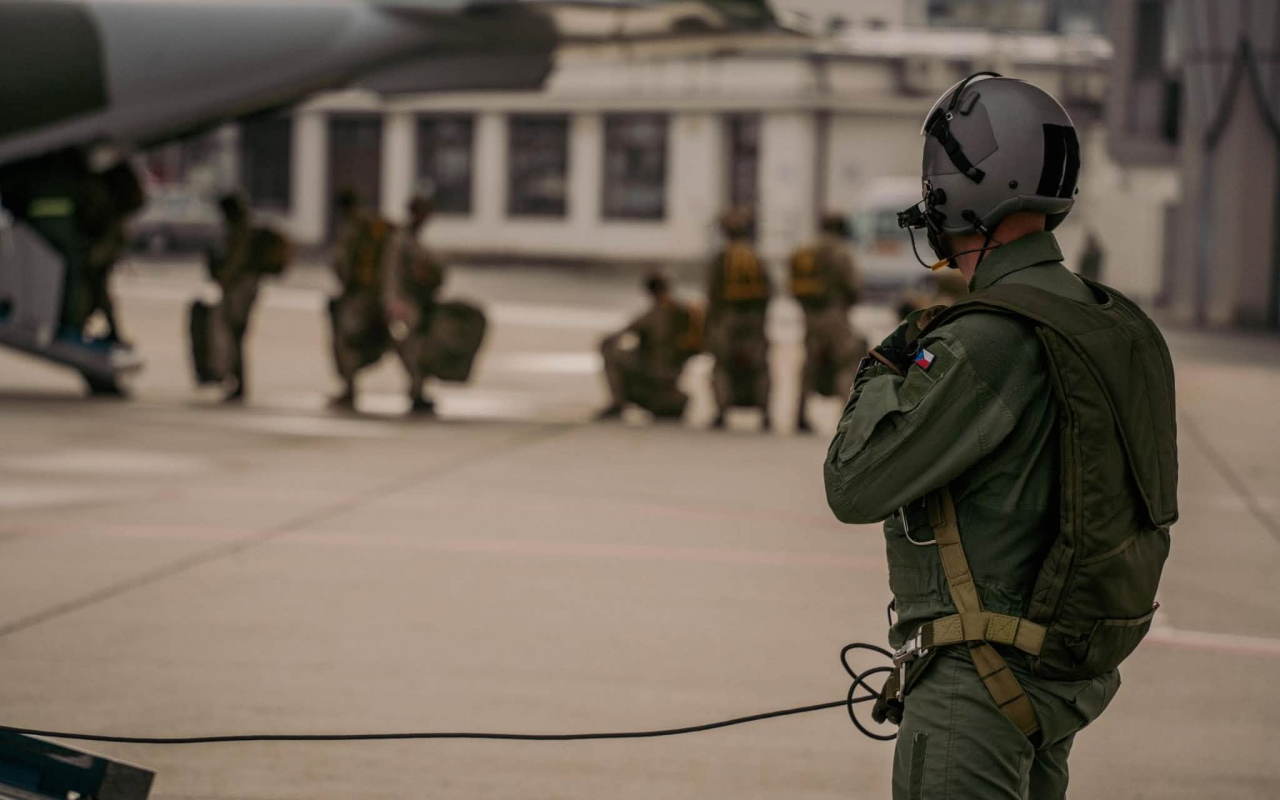
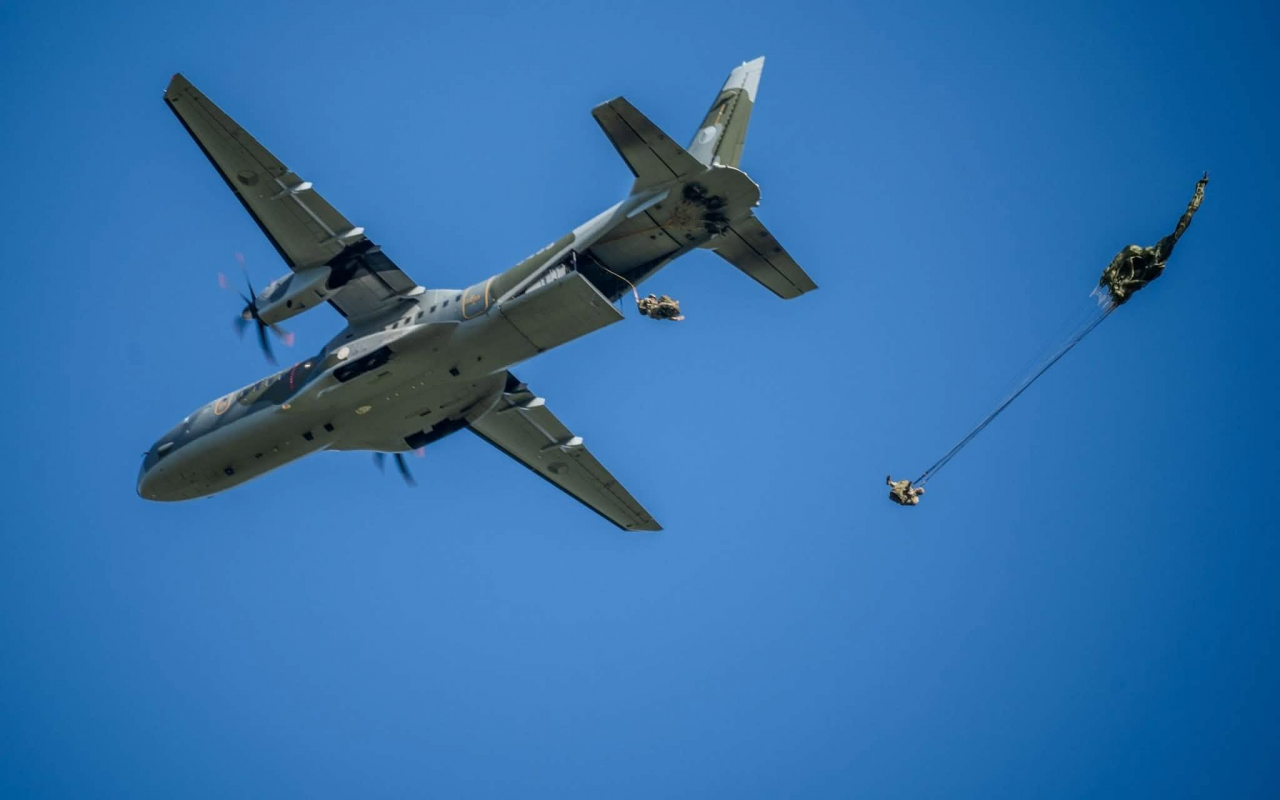
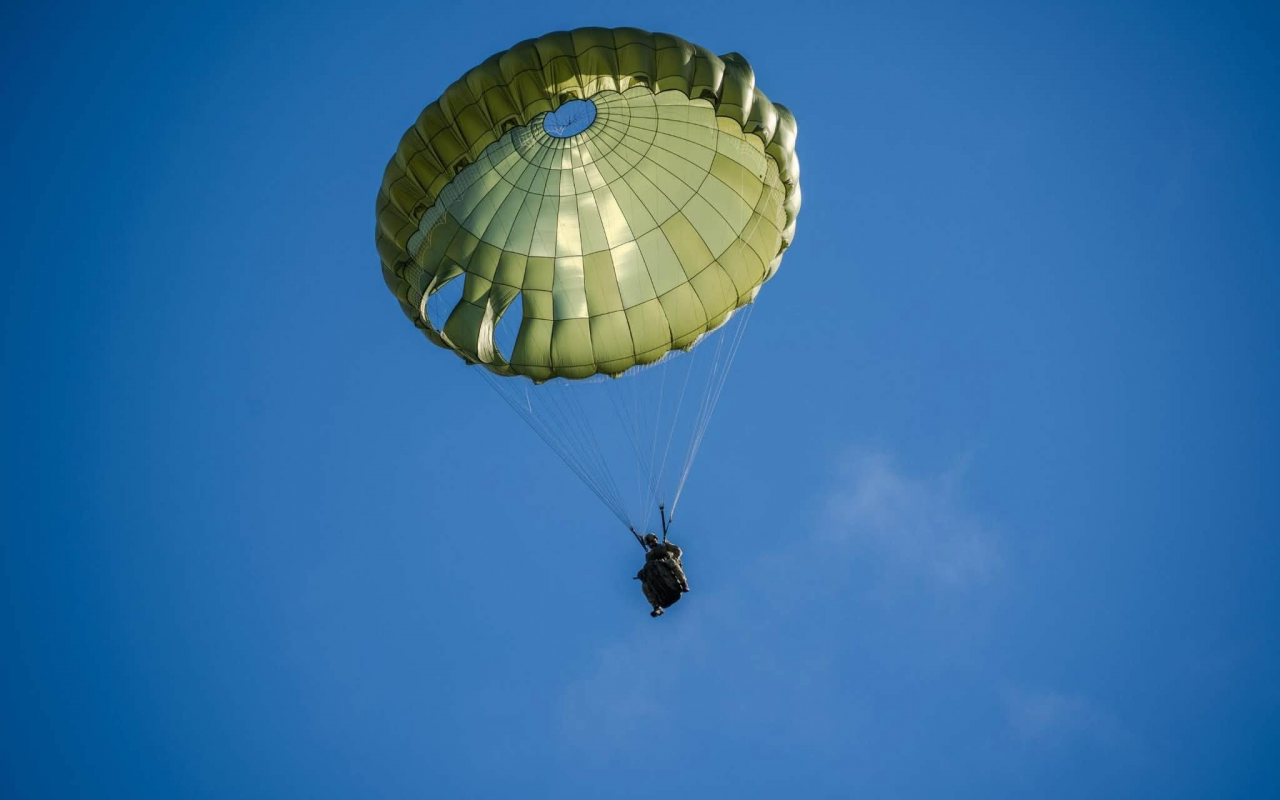
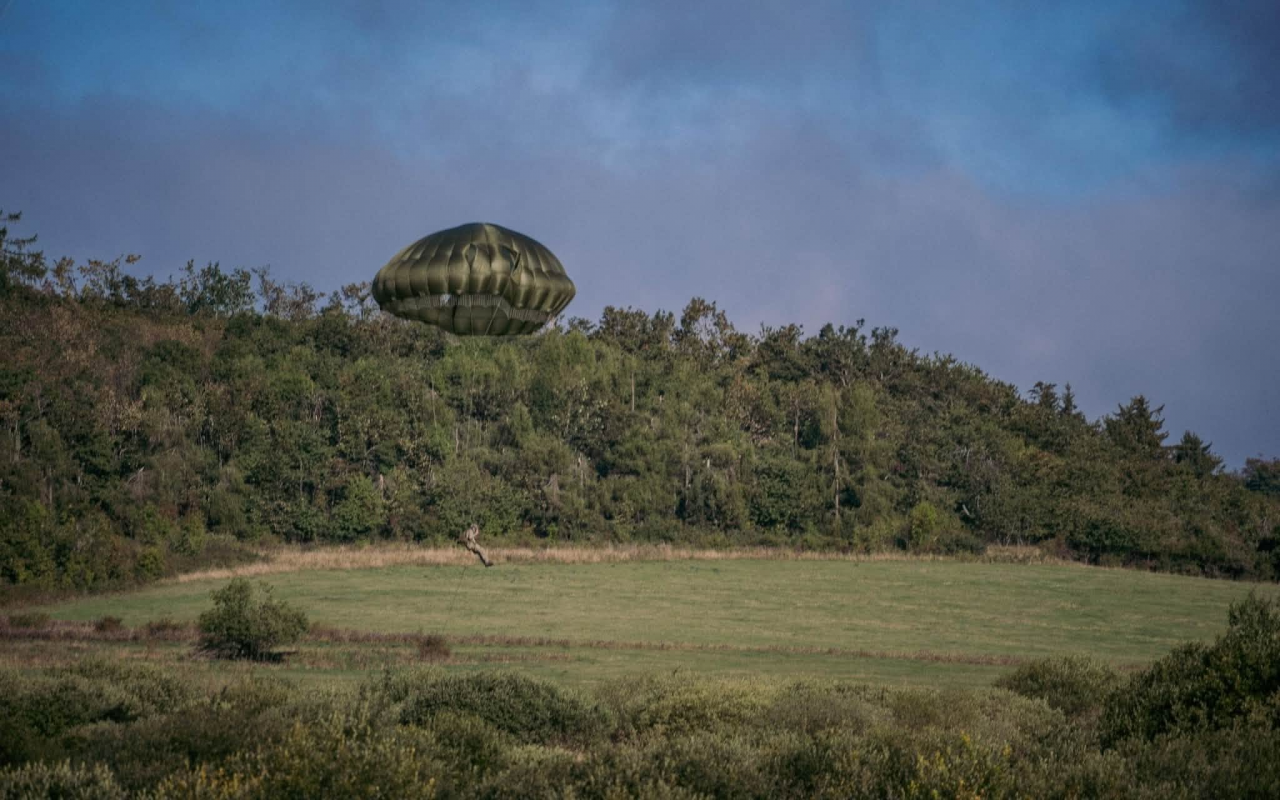
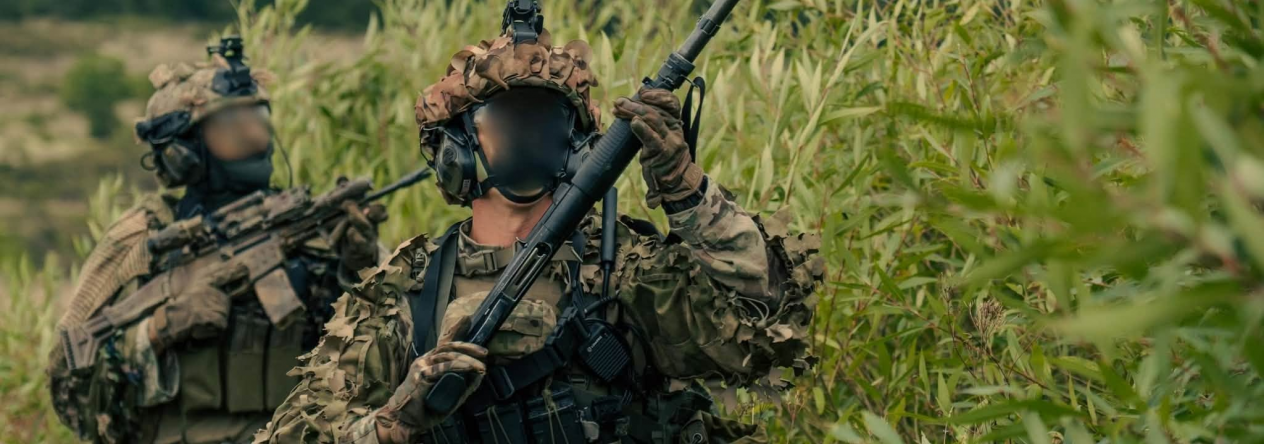
One of the exercise's main phases began in the air. A combat commando of the 43rd Airborne Regiment, reinforced by members of the Active Reserve, was inserted into the designated area by parachute from CASA C-295M transport aircraft. The jump itself was only the first step. After landing, the paratroopers had to restore their combat readiness as quickly as possible, assemble, establish their bearings and continue with their assigned task.
There was no time for an unhurried deployment. Contact with the adversary followed shortly after landing. The unit had to respond immediately, suppress the hostile activity and retain its ability to continue the operation. The first minutes after an airborne insertion are particularly critical: soldiers are still forming their combat formation after the jump, and an adversary may seek to exploit this temporary vulnerability.
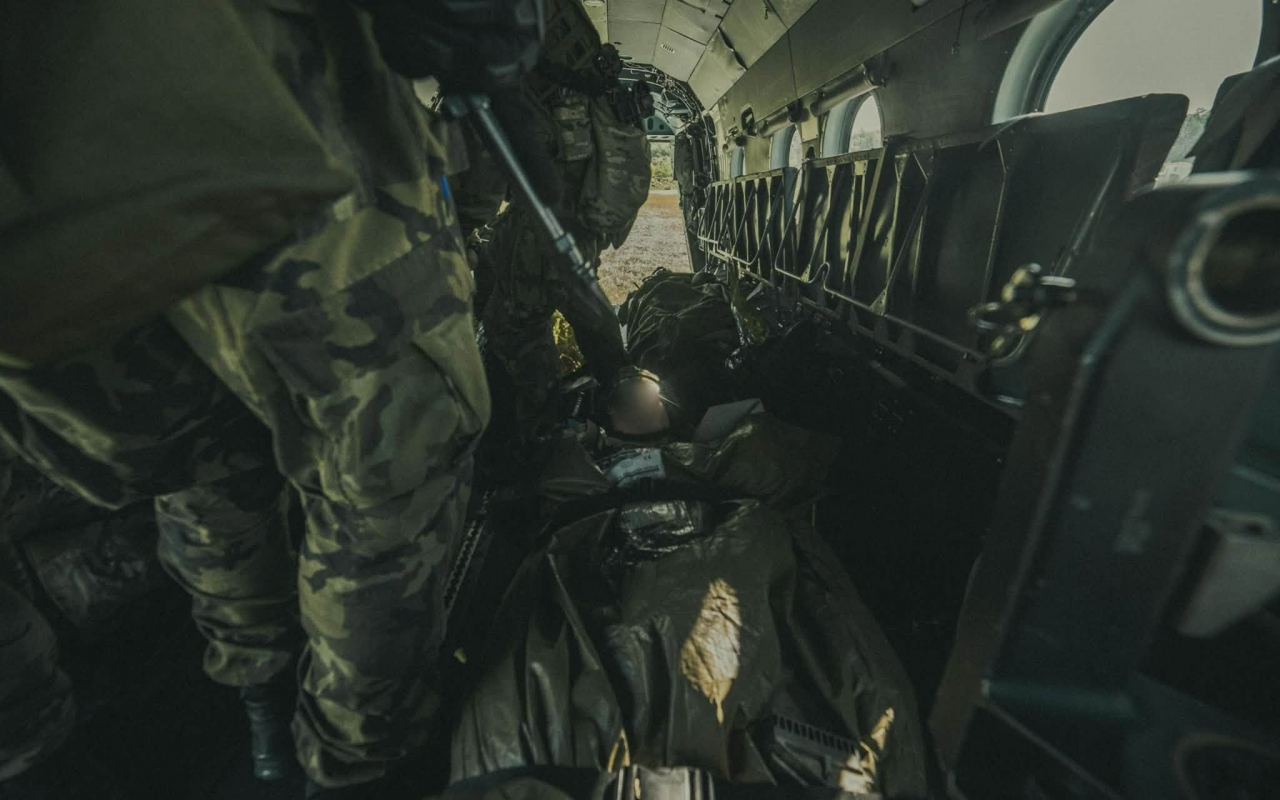
The paratroopers handled the contact and continued their task. The scenario also included casualties within their own ranks. They had to provide initial treatment, prepare the wounded for evacuation and maintain the unit's momentum. A medical detachment therefore joined the activity and arranged their onward transport for further care.
The Main Task Followed the Initial Contact
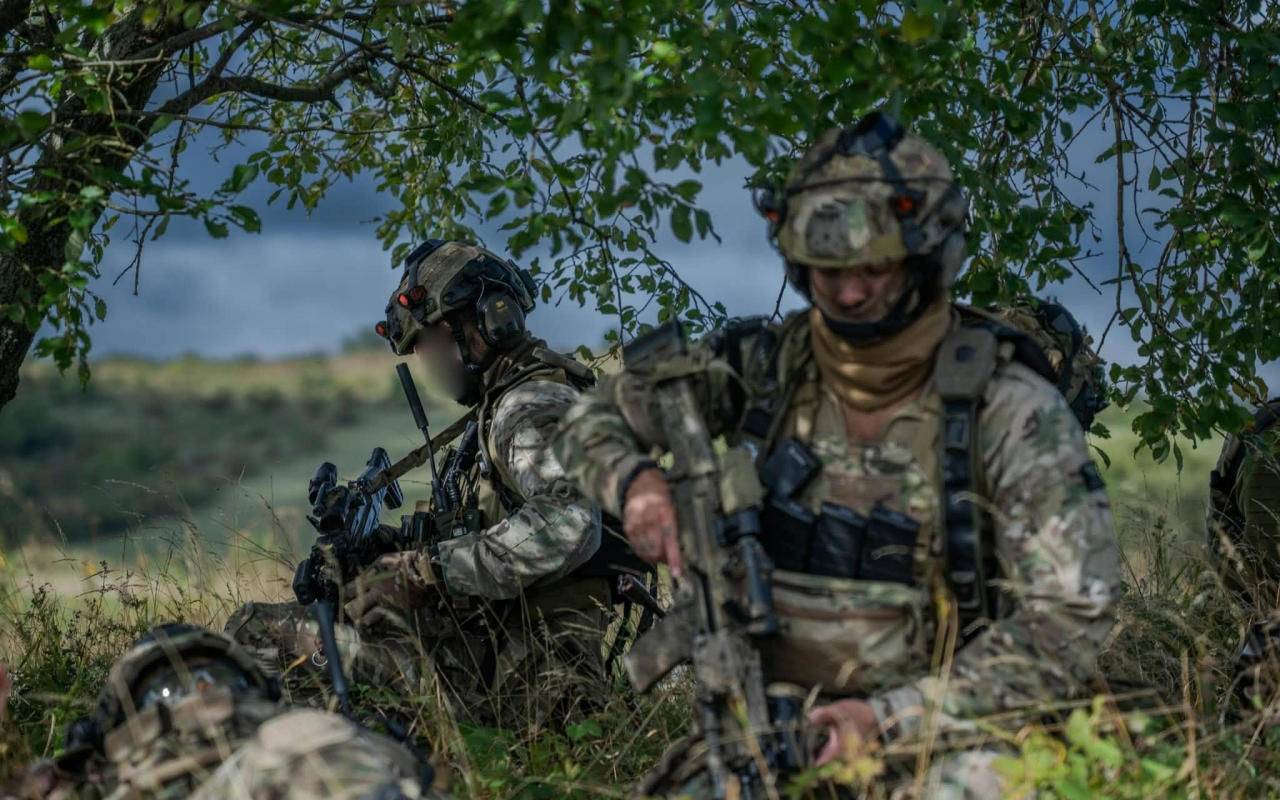
The scenario did not end with the opening engagement. The combat commando continued towards the area it had to seize and secure. There, the paratroopers occupied their designated positions, established a defence and prepared for further developments.
This phase demonstrated that the training was intended to test more than the parachute jump or a brief engagement. The unit had to complete a whole sequence of activities, from airborne insertion and combat after landing to assuming responsibility for its assigned area.
That area soon became the target of another attack.
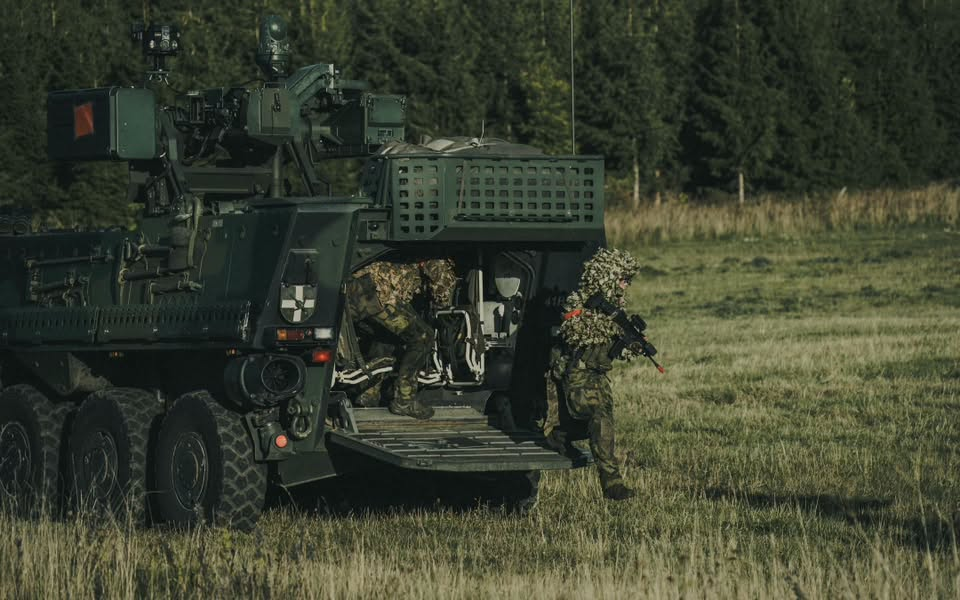
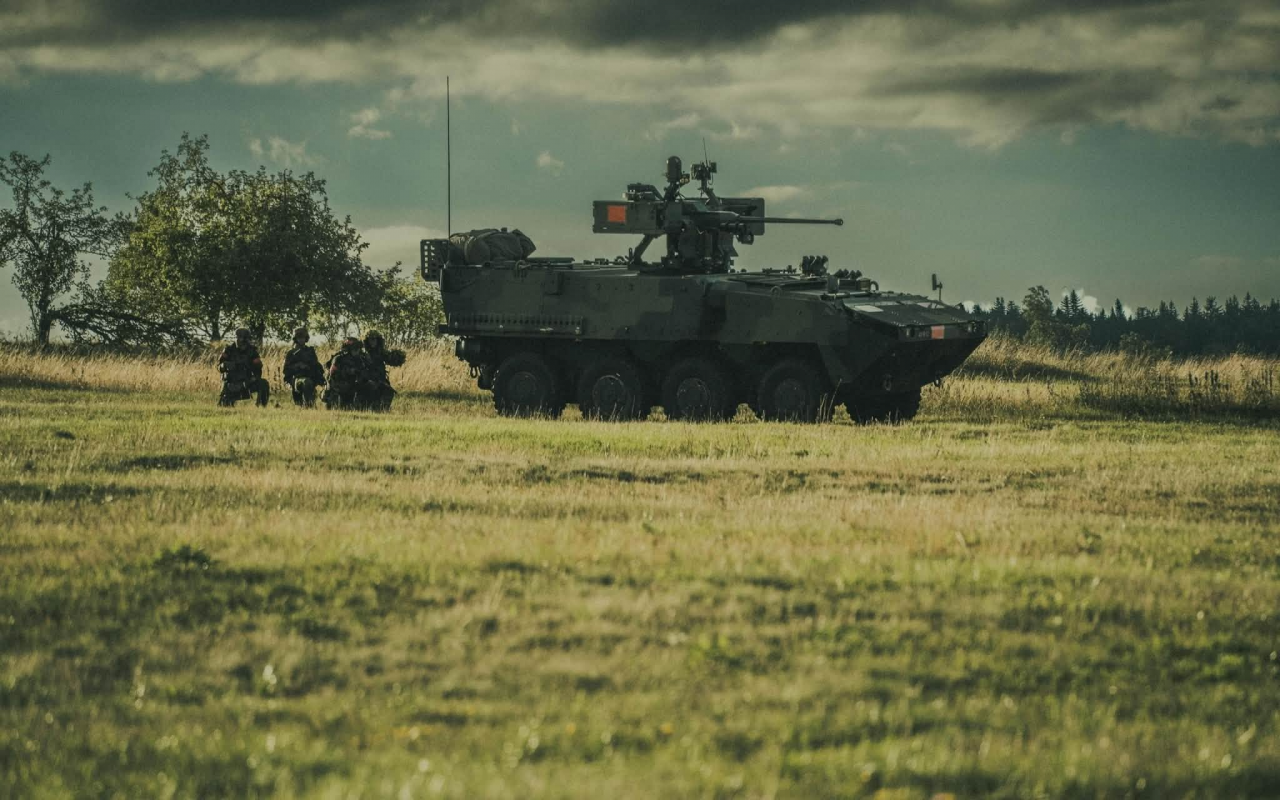
The adversary attempted to dislodge the paratroopers, committing three Pandur II 8×8 CZ wheeled infantry fighting vehicles to the attack. Their advance was not an isolated action. Uncrewed systems and artillery fire accompanied the attack, increasing pressure on the defenders and complicating their responses to individual threats.
The paratroopers therefore had to monitor developments on the ground and in the air simultaneously, respond to indirect fire and prevent a mechanised adversary from breaking through.
The task was clear: the area they had seized and secured had to be held.
Carl-Gustaf Against Armoured Vehicles
The crews operating Carl-Gustaf M3 multi-role recoilless weapons played a decisive part in stopping the mechanised attack. These are among an airborne platoon's most effective weapons against armoured targets, enabling it to destroy adversary equipment without support from its own heavy vehicles.
During the scenario, the crews had to assess the adversary's direction of advance correctly, select suitable targets and engage them when doing so would have the greatest effect on the engagement.
The result was clear. All three attacking Pandurs were knocked out during the scenario, bringing their advance to a halt.
The adversary failed to penetrate the defence.
The area remained in the paratroopers' hands.
Combat Does Not End When the Adversary Is Stopped
Repelling the attack did not end the unit's activity. As in the preceding phase, the scenario included casualties within its own ranks. This time, it tested more than initial treatment and ground evacuation: it examined the wider medical support system.
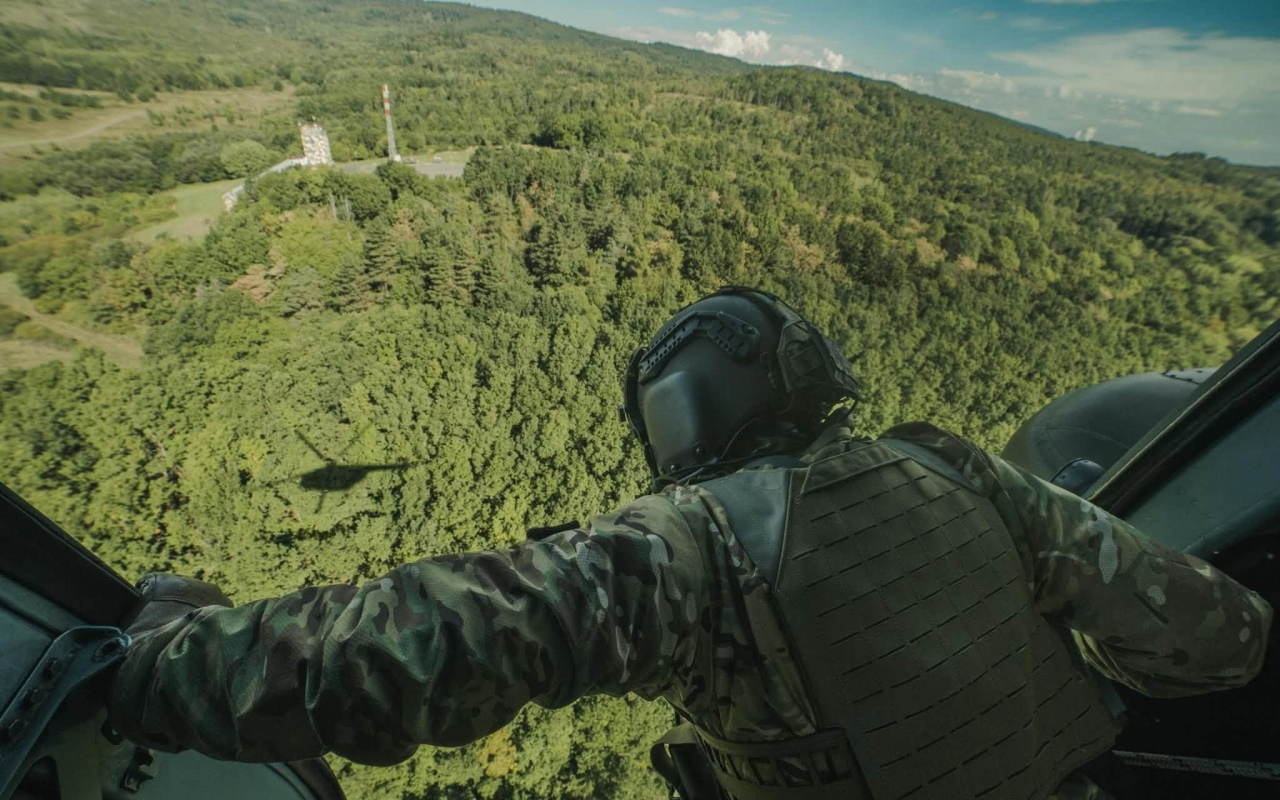
Mi-171Sh helicopters from the 22nd Helicopter Air Base therefore joined the operation. Working with the 43rd Airborne Regiment's medical detachment and personnel of the Military Medical Agency, they conducted MEDEVAC: the aeromedical evacuation of casualties from the combat area for further specialist care.
This part of the scenario tested how different elements of the Czech Armed Forces could link their activities within a short time and under the pressure of an ongoing operation, from initial treatment in the field and preparation for transport to handing the casualty over to the aeromedical element.
One Operation, Several Linked Tasks
The strength of Crimson Lightning II lay above all in the connection between its scenarios. The paratroopers were not assessed solely on their ability to complete an individual jump or engagement. They had to carry out successive tasks that built on one another and changed as the situation developed.
They were first inserted by air, facing an adversary immediately after landing. They then moved towards their main objective, seized the area, prepared its defence and faced a coordinated attack supported by armoured vehicles, uncrewed systems and artillery.
At the same time, they had to deal with casualties among their own soldiers, cooperate with medical elements and maintain the unit's combat effectiveness.
Such scenarios test the paratroopers' ability to operate in an environment where the situation changes quickly and individual tasks cannot be addressed in isolation. Accurate shooting and rapid movement matter, but so does the unit's ability to connect its activities, assess the situation correctly and continue its mission under adversary pressure.
Author: Maj Richard Maňásek