- 4.10.2026
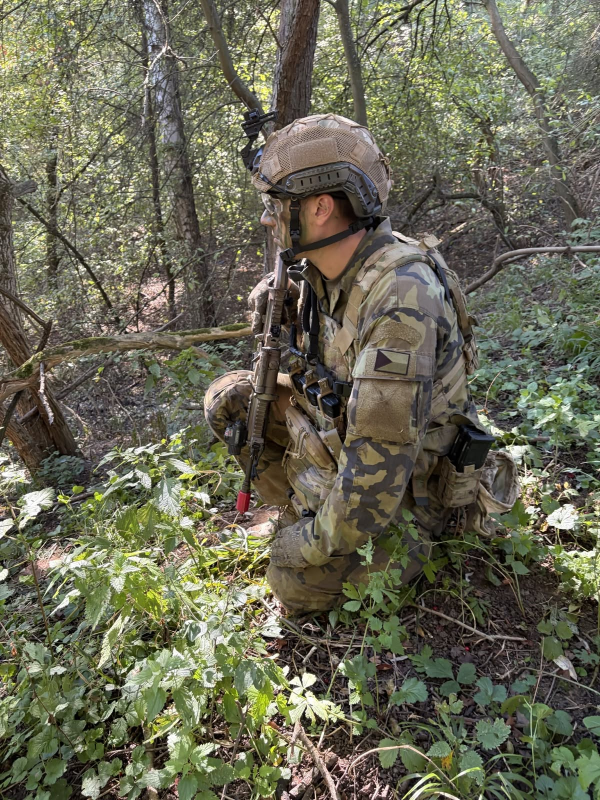
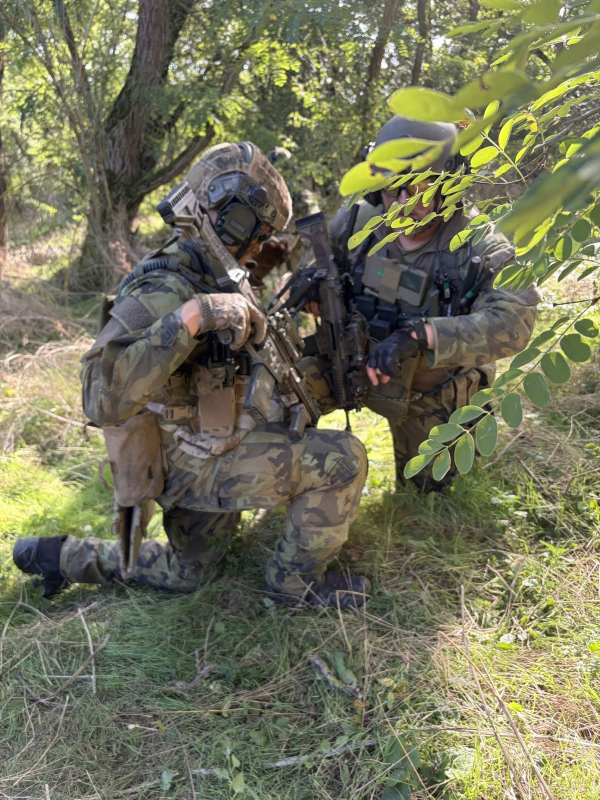
Contemporary conflicts continue to demonstrate that trenches and prepared defensive positions remain important even on a technologically advanced battlefield. The environment in which they are contested has changed, however. Uncrewed aircraft operate overhead, concealing unit movements is increasingly difficult, and information about an adversary reaches commanders faster than ever. Soldiers of the 2nd Mechanised Company, 42nd Mechanised Battalion “Saint Wenceslas”, focused on fighting in these conditions during their training.
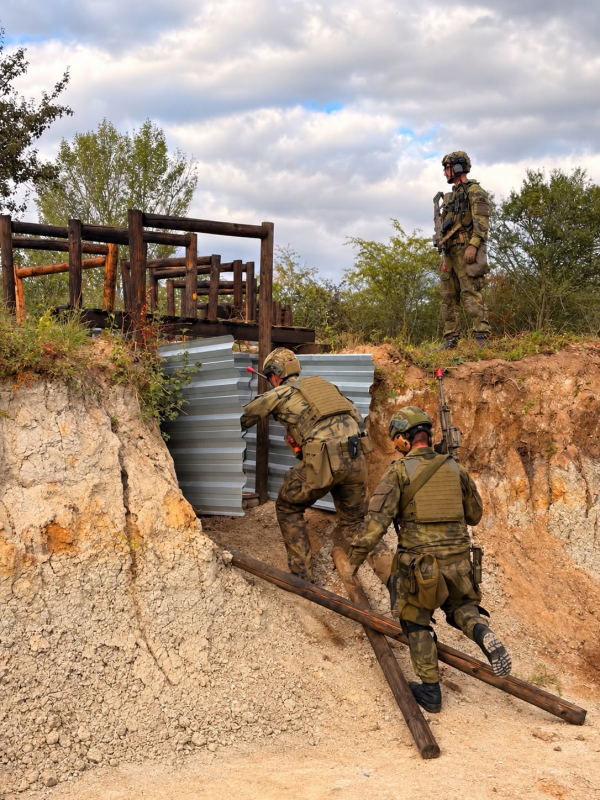
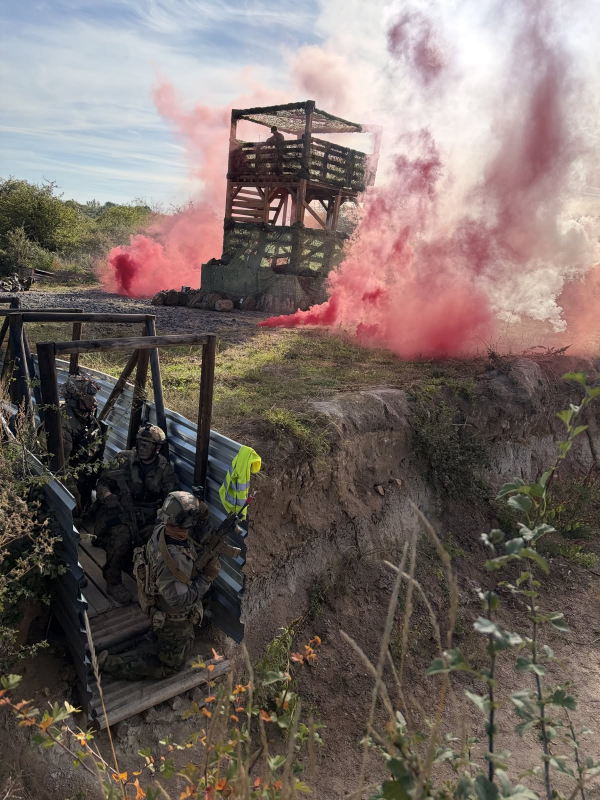
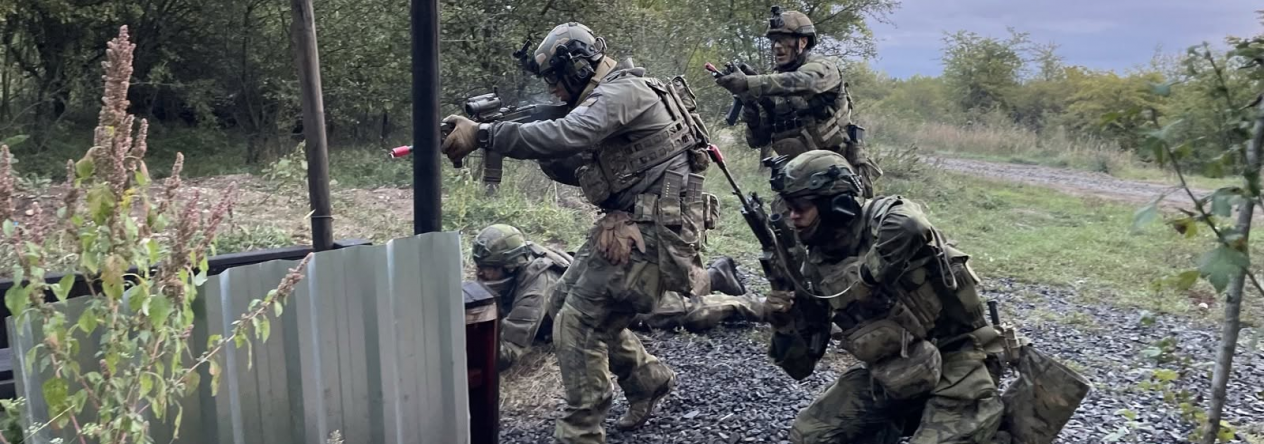
Two complex training serials set the soldiers a demanding task: enter a prepared trench system, progressively gain control of its individual sections and clear the entire area. The unit carried out the same type of task in daylight and darkness. The training therefore tested more than individual combat drills; above all, it examined whether squads and platoons could operate as a single force, exchange information and respond to a rapidly changing situation.
Trenches Present Some of Infantry's Toughest Challenges
Fighting in a trench system is exceptionally demanding for dismounted infantry. Narrow, irregular spaces restrict movement and visibility, while bends and obstacles separate individual sections of the position. A soldier often cannot see more than a few metres ahead. The situation can therefore change within seconds.
Teamwork is essential in this environment. Every soldier must understand their role, remain aware of what others are doing and maintain an understanding of their surroundings. Speed alone is not enough. Precise coordination of movement, mutual cover and the ability to communicate amid noise, stress and physical exertion are equally important.
The training therefore tested not only the execution of individual activities, but also the unit's ability to maintain its rate of advance without losing coordination. Trenches offer little opportunity for lengthy decision-making. Each further section presents a new challenge, requiring the unit to adapt continually to what lies ahead.
Trenches Are Not a Thing of the Past
Experience from recent conflicts also shows that trenches are not relics of earlier wars. On today's battlefield, they form part of a much broader defensive system that may include shelters, firing positions, engineer obstacles, minefields and other prepared positions.
Their importance extends beyond protecting soldiers from direct fire. A well-prepared defensive system slows an adversary's advance, limits their manoeuvre options and forces them to fight in terrain prepared by the defender. Every metre can present a distinct tactical challenge.
The modern battlefield also demonstrates that a trench cannot be considered in isolation. It forms part of an environment combining infantry, artillery, engineers, reconnaissance, electronic warfare and, increasingly, uncrewed systems.
Drones Change the View of the Battlefield
Uncrewed systems are among the technologies that have fundamentally changed warfare in recent years. They provide an aerial picture of the situation, enable movements to be monitored and can significantly shorten the interval between detecting a target and a unit's response.
They also present a threat. A unit can no longer assume that its movements will remain concealed. An area once considered safe may be observed from the air, with information passed almost immediately to other adversary elements.
This was also why drones formed part of the 42nd Mechanised Battalion's training. Their involvement brings training closer to contemporary battlefield conditions, in which commanders and individual soldiers must account for events overhead as well as what they can see in front of them.
Uncrewed systems can also provide friendly units with information that would be difficult to obtain from the ground. A commander can better understand the wider situation, while soldiers inside a trench have a very limited view. Connecting aerial information with the activity of a dismounted unit is therefore becoming an increasingly important battlefield capability.
Day and Night Present Different Challenges
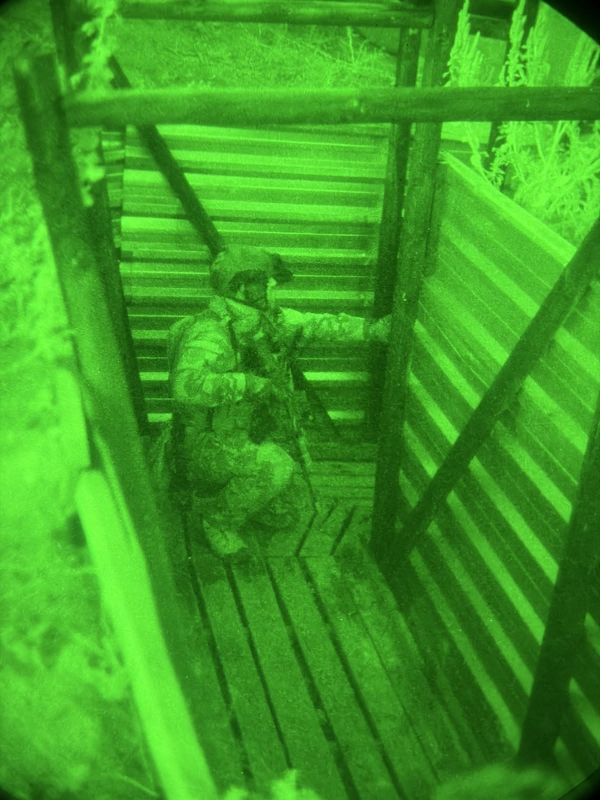
Conducting the training in both daylight and night conditions added another level of difficulty. The same area and task can present an entirely different situation after dark.
Reduced visibility complicates orientation and places significantly greater demands on communication between soldiers. Proficiency with night-vision equipment and other observation devices also becomes more important, as does the ability to move without disrupting other team members' activity.
Routine tasks take longer in darkness. An error quickly corrected in daylight can have far greater consequences in reduced visibility. Night training is therefore more than a repetition of the same scenario under different lighting. It tests whether a unit can continue its task with substantially less information about its immediate surroundings.
Technology Changes; a Cohesive Team Remains Essential
Lessons from contemporary conflicts are increasingly reflected in unit preparation. The rapid development of uncrewed systems, sensors and electronic warfare changes how units are detected, tracked and attacked. It also confirms the importance of capabilities that have long remained fundamental to infantry.
Soldiers must work effectively in small teams, respond quickly to changing situations and continue their tasks under physical and psychological pressure. The confined space of a trench soon reveals whether a unit is truly cohesive.
Each soldier depends on the others. They must know what the person ahead and behind is doing, and trust others to carry out their part correctly. Such training therefore tests more than tactics and weapons handling. It also builds trust within the unit and strengthens cohesion.
Modern technology can provide soldiers with more information, a clearer picture and new ways of fighting. It cannot complete the mission by itself. The outcome still depends on soldiers' ability to assess information correctly, cooperate and act when only seconds remain for a decision.
The 2nd Mechanised Company's training combined traditional infantry skills with contemporary battlefield requirements. Trenches, drones, daylight and night combat were different elements of one scenario: preparing a unit to respond quickly, coordinate its actions and operate as a single force.
Author: Maj Richard Maňásek