- 25.9.2026
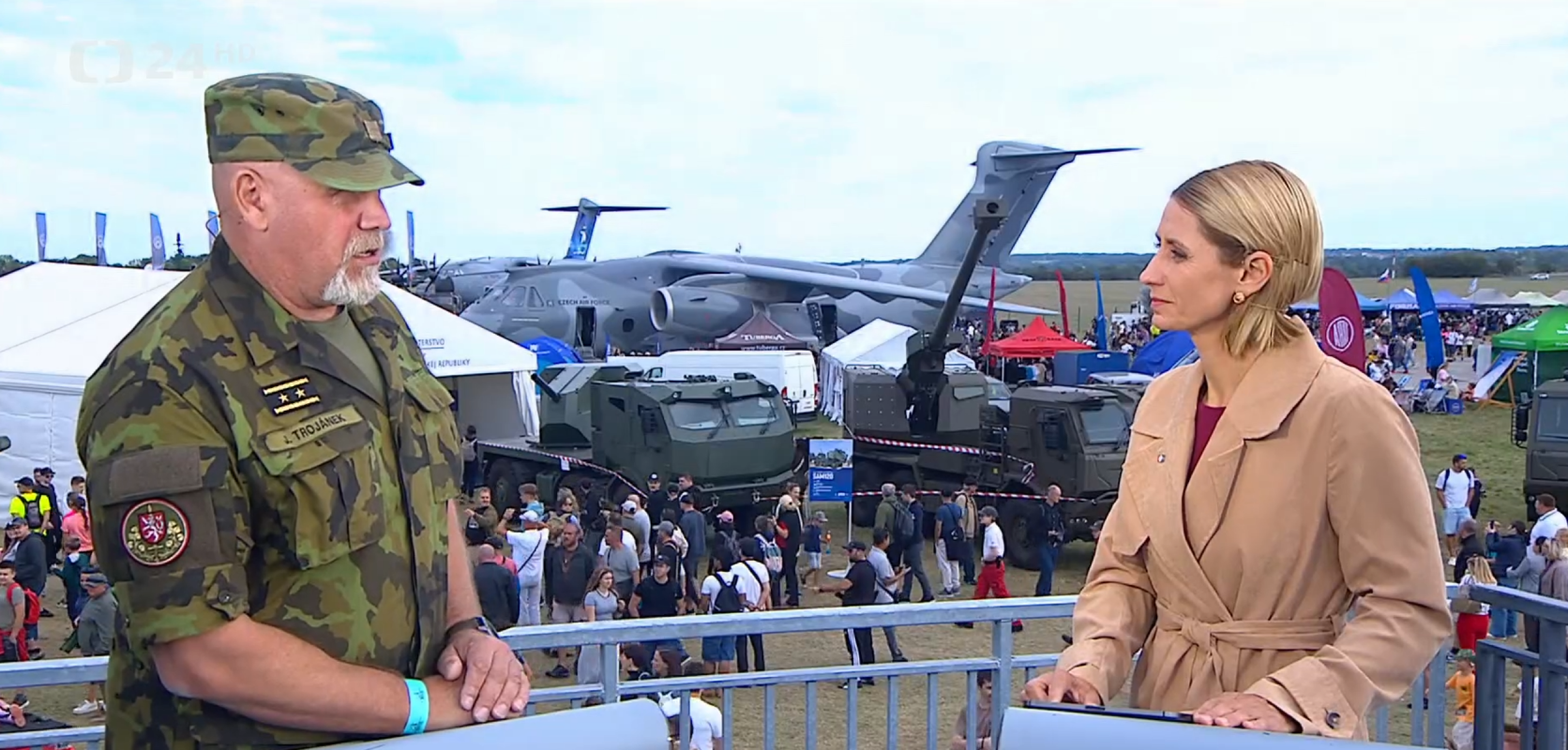
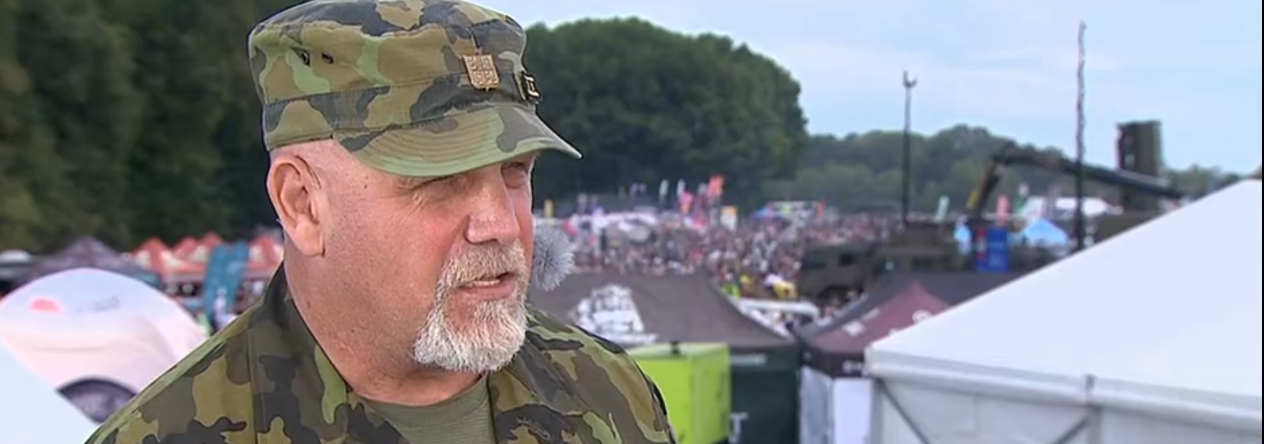
Modernisation of the Land Forces involves more than new tanks or combat vehicles. It starts with the individual soldier: their equipment, protection, communications, physical readiness and ability to operate in demanding conditions. During NATO Days 2026, Major General Josef Trojánek, Commander of the Land Forces, discussed their present and future in an interview on ČT24.
Tanks, infantry fighting vehicles and helicopters are among the most visible symbols of military modernisation. According to the Commander of the Land Forces, however, combat effectiveness begins at a much more fundamental level: with the individual soldier and the equipment available to them every day.
“A soldier must have basic equipment, weapons, protective equipment and communications. Then, of course, they can function at the most basic level,” said Major General Josef Trojánek.
He emphasised that this involves more than procuring individual items. They must form a functioning whole that can be developed systematically. “The aim is to bring all the components we are currently addressing individually together into one functioning whole,” he explained.
Personal Equipment Matters
A new camouflage pattern and field uniform are among the visible changes ahead. The Commander of the Land Forces stressed that this is more than a question of appearance. Material quality and functionality matter, as does the fact that soldiers experience changes in personal equipment directly.
Modernising personal equipment also signals that the armed forces are addressing the needs of the people who operate their vehicles and equipment and use them to carry out missions.
General Trojánek considers the relationship between people and their equipment essential. Even the most advanced technology is insufficient if a unit lacks well-trained and well-equipped soldiers.
Forty Kilograms or More
Physical readiness in the Land Forces is closely linked to operational conditions. Ballistic protection, a weapon, ammunition and other essential equipment impose a considerable load.
“I would not be far from the truth if we were talking about forty kilograms or more,” the Commander of the Land Forces explained.
A soldier wearing this equipment must be able both to move and to perform tasks over an extended period. General Trojánek referred to the ability to operate in combat for at least 72 hours. Physical fitness is therefore a prerequisite for coping with real operational demands, rather than a requirement for its own sake.
He does not, however, expect those joining the Land Forces to be fully prepared from their first day.
“I am, of course, aware that the people joining the armed forces will probably not all be highly fit individuals. It is then our job to establish a system that gives them the places and resources to improve, with proper guidance,” he said.
Above all, he expects new personnel to be determined to improve and gradually reach the required standard.
“I would expect them to enter service in the Land Forces with total commitment, doing everything they can to reach the required standard within a year or two.”
Personnel Numbers Are Increasing
Personnel remains an important area of Land Forces development. According to General Trojánek, staffing is still below the required strength, but the trend has changed recently.
“We still have a shortfall, but the number of Land Forces personnel is now clearly increasing,” he said.
He explained that the decline was halted around the middle of 2025 and personnel numbers have been gradually increasing since then.
A Heavy Brigade and a New Generation of Equipment
Alongside improvements for individual soldiers, modernisation of the Land Forces' principal combat capabilities continues. Developing a heavy brigade is one of the priorities.
The core of this capability is a mechanised brigade that is to transition to CV90 tracked infantry fighting vehicles. General Trojánek described the move from the current BVP-2 vehicles as a generational leap.
The tank force is also changing. The 73rd Tank Battalion already operates Leopard 2A4 tanks, and the armed forces also plan to introduce the latest Leopard 2A8 version in the future.
The future of wheeled combat vehicles is another topic. General Trojánek argued that discussion of a possible successor to the Pandur platform should not revolve primarily around the name of a particular manufacturer.
“I would expect roughly the same technological leap as between the BVP-2 and the CV90. That means obtaining a vehicle that can perform in the conditions of the contemporary battlefield,” he said.
He therefore considers the ability to operate in contemporary conflict conditions one of the main criteria for further modernisation.
Drones Are Already Part of Training
The importance of uncrewed systems is also changing significantly. Experience from contemporary conflicts confirms that drones have become a routine part of the battlefield, and their use is increasingly reflected in the preparation of land units.
Land Forces Command has its own specialist section focusing on uncrewed systems and is also preparing a system of specialist personnel education.
“We have a clear idea of what we need. We have established or designed a personnel education system to ensure that people have the necessary specialist expertise,” General Trojánek said.
He explained that many mechanised, motorised and airborne units already train routinely with uncrewed systems. Their use should expand as more equipment becomes available.
“We have people, and we have capable people. We know that interest in this field among soldiers is enormous,” he added.
Modernisation as a Whole
The Land Forces Commander's interview during NATO Days presented a broader view of modernisation than the display of new equipment alone. New tanks, combat vehicles and uncrewed systems represent only part of the changes.
Individual equipment, physical readiness, training, sufficient personnel and the ability to integrate these elements into a functioning system are equally important.
A well-trained and well-equipped soldier remains the foundation that allows modern technology to fulfil its potential.
Related information