- 22.9.2026
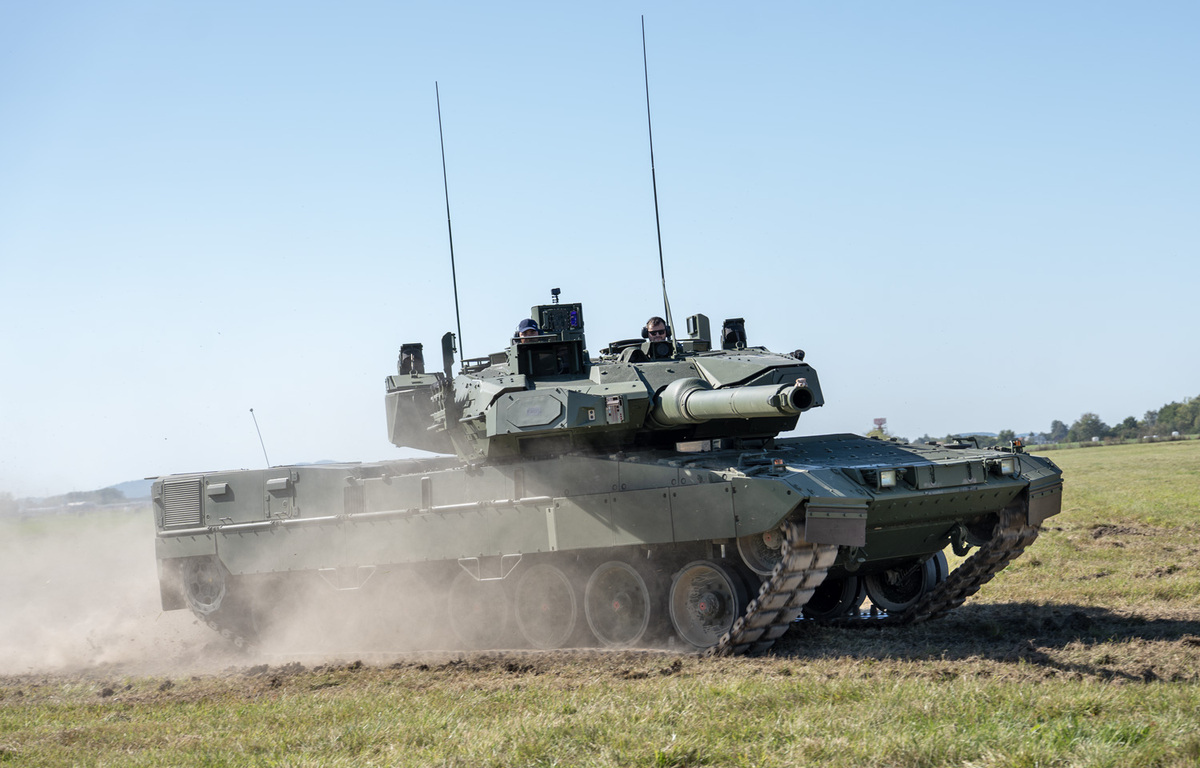
Brigadier General Zdeněk Mikula handed over the 7th Mechanised Brigade with its course set for the greatest technological transformation in its recent history. His successor, Colonel (General Staff) Miroslav Vybíhal, therefore takes command of a brigade already entering modernisation. Leopards, CV90s, CAESAR howitzers, TITUS vehicles and other systems will gradually change its equipment. An even greater change will take place within its units: in command, training, information sharing and the conduct of combat.
When Brigadier General Zdeněk Mikula handed over command after four years, he repeatedly stressed that modernisation must not overshadow the brigade's true foundation: its people. His successor builds on this approach as long-prepared projects begin to affect daily unit activity on a large scale. Receiving equipment is not enough. Crews, specialists and instructors must be trained, training adapted, logistics adjusted and staffs taught to handle the information generated by modern platforms. The new commander considers the transition from an analogue to a digital environment one of the greatest challenges of the coming years.
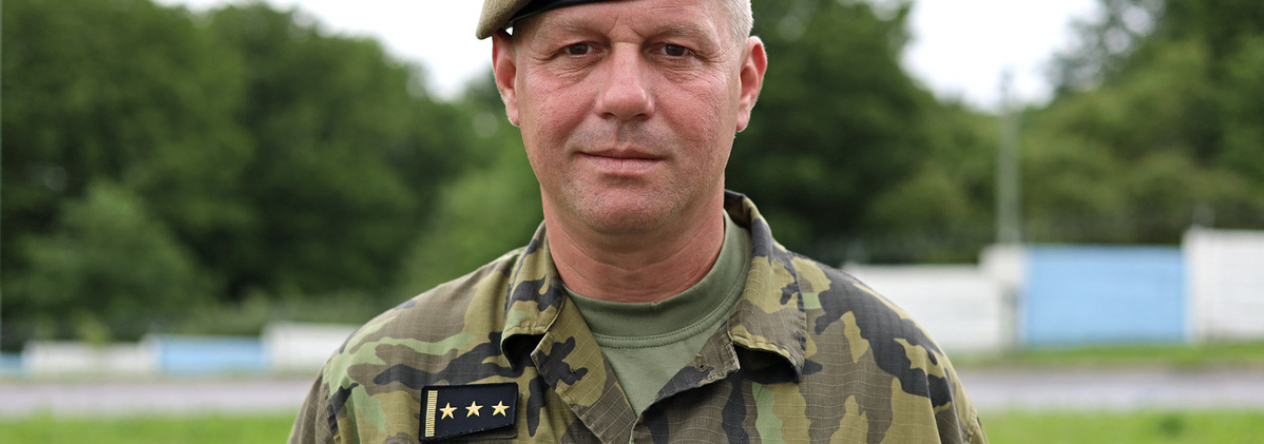
He brings extensive knowledge of the brigade. He served at its headquarters, commanded the 72nd Mechanised Battalion, then became the brigade's Chief of Staff and Deputy Commander. After less than two years away from Hranice, he returned to a unit he knows from several command levels. “The position of brigade commander is new to me, but I have been associated with the 7th Mechanised Brigade since 2015. I left for Prague for just under two years, but I consider returning to Hranice the best thing that could have happened to me professionally,” Colonel Vybíhal says.
Modernisation Projects Must Become an Integrated Set of Combat Capabilities
The new commander considers the brigade to be in good condition. Staffing is a particular advantage because people will be decisive during re-equipment. More complex equipment means longer specialist preparation and greater investment in each individual. Losing an experienced gunner-operator, technician or instructor will therefore become more costly than it is today. Colonel Vybíhal sees the main task as part of a Czech Armed Forces priority: building a heavy brigade. Modernisation must therefore extend beyond CV90s and Leopards.
“This is not just about CV90 vehicles. Modernisation concerns the entire brigade and the elements of the brigade task force. In fact, a whole range of large and small projects is under way, together increasing the brigade's capabilities,” Vybíhal explains. The key word is together. A modern tank, tracked infantry fighting vehicle, artillery system or communications capability may individually outperform the equipment it replaces. Their integration creates the brigade's real combat value. This continues the direction set by General Mikula: the 7th Mechanised Brigade must be a system of mutually supporting capabilities.
CV90 Is More than an Improved Infantry Fighting Vehicle
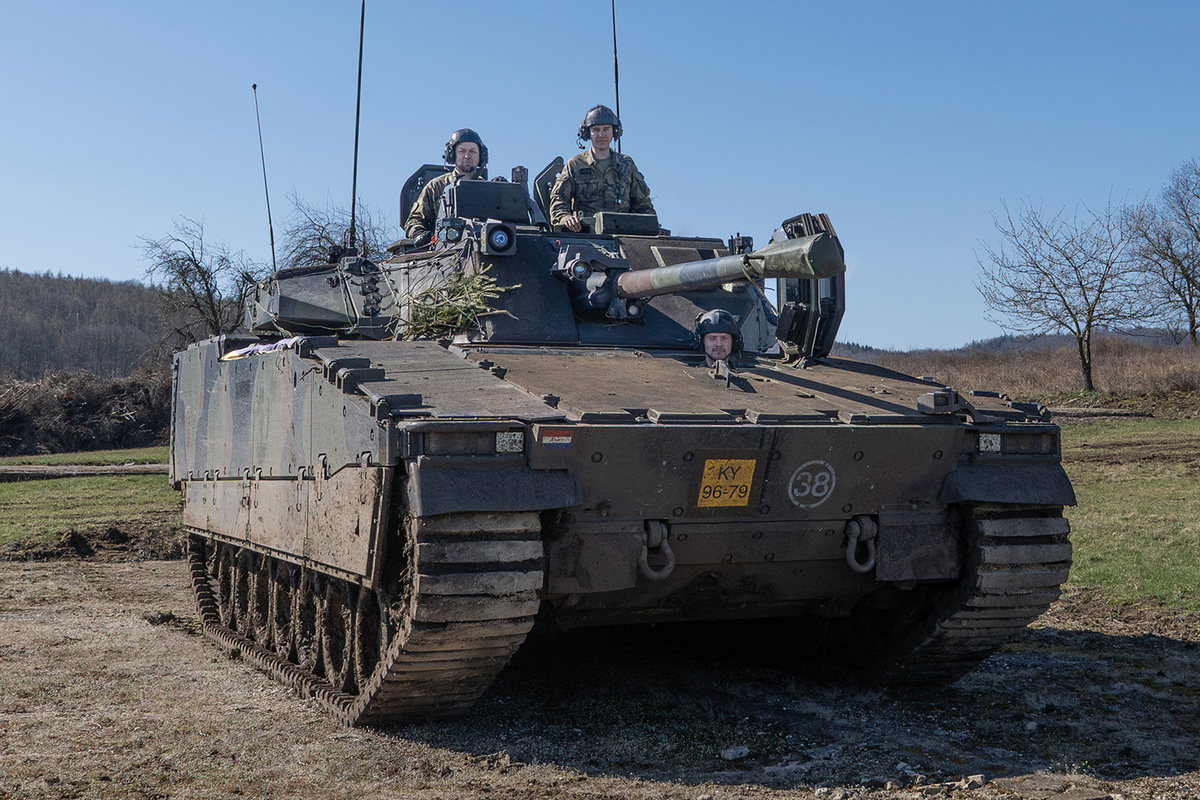
Mechanised battalions will experience the greatest change in the coming years. Under the current schedule described in the article, CV90 testing is to begin in early 2027, followed by deliveries. The Czech Armed Forces are to receive 246 vehicles in seven variants by the end of 2030. The project's scale demonstrates that replacing BVP-2s with newer vehicles involves a platform operating in a fundamentally different way.
Colonel Vybíhal compares the change to moving between generations of consumer electronics. “If you put an old BVP-2 next to a CV90, it is like a push-button phone beside the latest iPhone. It is not just a new device, but a completely different way of working.” This captures the change more effectively than a list of specifications. Improved ballistic protection, firepower and mobility will be visible features. Digital architecture, sensors, fire-control systems and information handling may be even more important to unit performance.
Crew requirements will increase significantly. According to the commander, the basic gunner-operator course is expected to take approximately twice as long as the current model, while mastering the fire-control system will take months. Each experienced specialist will represent a greater investment of time and resources, making retention increasingly important. Advanced equipment may also help stabilise staffing by appealing to serving soldiers and a new generation of applicants.
CV90 Will Also Change Dismounted Infantry Tactics
The generational shift extends beyond vehicle crews. CV90 will also change how mechanised infantry operates after dismounting. One example is the active protection system, designed to detect and defeat certain incoming threats before they strike the vehicle. It improves protection but creates new requirements for coordination with infantry. Soldiers will not be able to move close to the vehicle in the same way as with current infantry fighting vehicles.
This illustrates a wider principle: new technology often changes established practices as well as adding capability. CV90's information role may be even more significant. Modern sensors will collect information about adversaries at greater distances and share it with the crew and other elements. Beyond transport and fire support, the vehicle becomes a sensor and information node. On a battlefield where the speed of the information cycle increasingly matters, this may be as important as firepower.
Ukraine Provides Lessons, Not the Only Model of Future War
The war in Ukraine has strongly influenced debate about heavy land forces. The spread of drones and precision-guided ammunition has prompted renewed questions about tanks and mechanised units. Miroslav Vybíhal cautions against simple conclusions: “I do not like everything being measured exclusively against the war in Ukraine. It has shown the importance of drones, but that does not mean mechanised infantry or tanks are losing their significance.”
He emphasises a principle confirmed by contemporary conflicts: no capability functions alone. Tanks need infantry, reconnaissance, engineer support, air defence and artillery. Mechanised infantry needs tanks and fire support. Every unit needs information, logistics and protection against uncrewed systems. “The nature of modern combat is determined not by one dominant system, but by the effective cooperation of all its elements.” This is the philosophy on which the commander intends to build the heavy brigade.
He applies the same reasoning to tanks. With some exaggeration, Vybíhal rejects their traditional description as the “king of the battlefield”, historically assigning that role more to artillery. Nevertheless, tanks remain an irreplaceable combination of firepower, protection and the ability to operate in direct contact with an adversary. Their importance is not diminishing; the conditions of their employment are changing.
Drones Do Not Make Tanks Obsolete
The same perspective applies to uncrewed systems. Their rapid development creates additional protection requirements for heavy armoured platforms. Modern vehicles may use electronic warfare capabilities, passive protection and active protection systems, but no individual vehicle can address the full spectrum of threats.
Heavy unit protection must therefore be layered. Vehicles need support from additional sensors, electronic warfare, air defence and effectors capable of engaging different threats. This returns to Vybíhal's central argument: strength lies in integrating systems. As the 7th Mechanised Brigade moves to more digitally advanced platforms, greater capability will increase its dependence on effective information flow and cooperation between elements.
A Heavy Brigade Is Not Completed by the Last CV90 Delivery
Building a Czech heavy brigade cannot be measured solely by delivered tanks and infantry fighting vehicles. Colonel Vybíhal notes that European armed forces focused primarily on expeditionary operations for several decades, shaping force structures and investment priorities. Some capabilities essential to high-intensity combat, including air defence and heavy land forces, were reduced. Restoring them requires more than one procurement project.
The brigade will need appropriate logistics, engineer support, artillery, air defence, reconnaissance, communications, medical support and infrastructure. Investment will not deliver its full effects immediately. The commander warns that a decision made today may produce its full capability only five or six years later. The brigade's current phase is therefore crucial: projects prepared over previous years are moving from contracts and schedules into everyday unit life.
Continuity Rather than Revolution
The change of commander preserves the established direction. General Mikula handed over a brigade with key modernisation processes in place. His successor knows them well and was directly involved in some. Colonel Vybíhal understands the brigade from battalion, brigade staff and higher-level perspectives.
This continuity may be a significant advantage during extensive re-equipment. The brigade needs to maintain momentum and turn existing projects into real capability. “I see an overall shift: we are moving forward mentally and technologically,” Vybíhal says of developments during his service.
In the coming years, the brigade must manage both changes simultaneously. Leopards and CV90s will visibly transform vehicle parks, workshops and training areas. The more complex change will take place in soldiers' and commanders' thinking, in the use of sensors and information, the speed of decisions and the integration of new platforms into a functioning combat system.
That will ultimately distinguish modernised equipment from a truly modern heavy brigade.
Author: Capt Romana Spitzerová; article published on CZDEFENCE.